
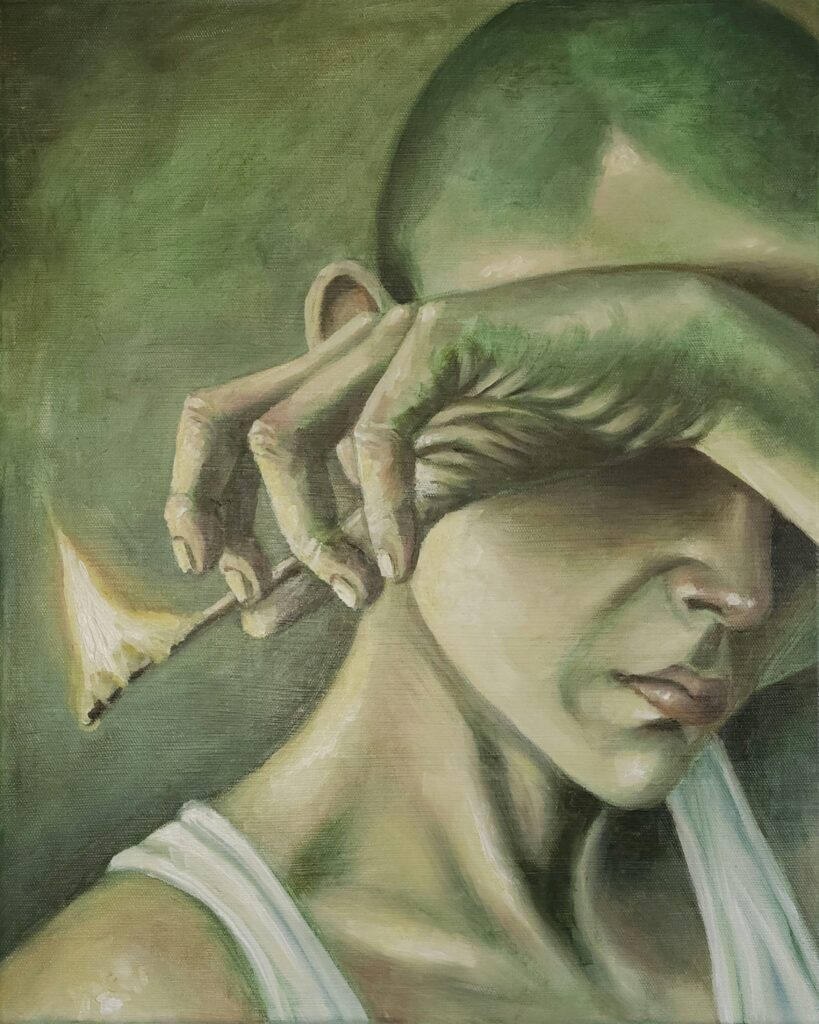
Eva Zucker (born 1985 in Neustrelitz, Germany) is a contemporary figurative painter working as a freelance artist in Germany. Her work explores emotional tension, vulnerability, perception, and the subtle complexity of human experience. Through figurative scenes, she creates quiet, psychologically charged situations that move between control and exposure, often carrying a gently shifted sense of reality.
Working with acrylic and, more recently, oil on canvas, Zucker builds her paintings through layered glazes as well as direct, expressive brushwork, allowing precision and openness to coexist within the image.
Her work is held in private collections in Germany, Austria, and Switzerland, with several works recently added to the dd.g collection. Her exhibition activity includes contexts such as Kunst Offen and the exhibition environment around Kunstmuseum Malchow, with further projects developing in connection with the Mazaggs art and hotel context in Austria.
Your figurative paintings primarily aim for an emotional and psychological impact. What are some visual techniques (compositional/color palettes/mediums, etc.) you use to communicate the wide range of human experience, including feelings of instability, tension/contradictions, and vulnerability?
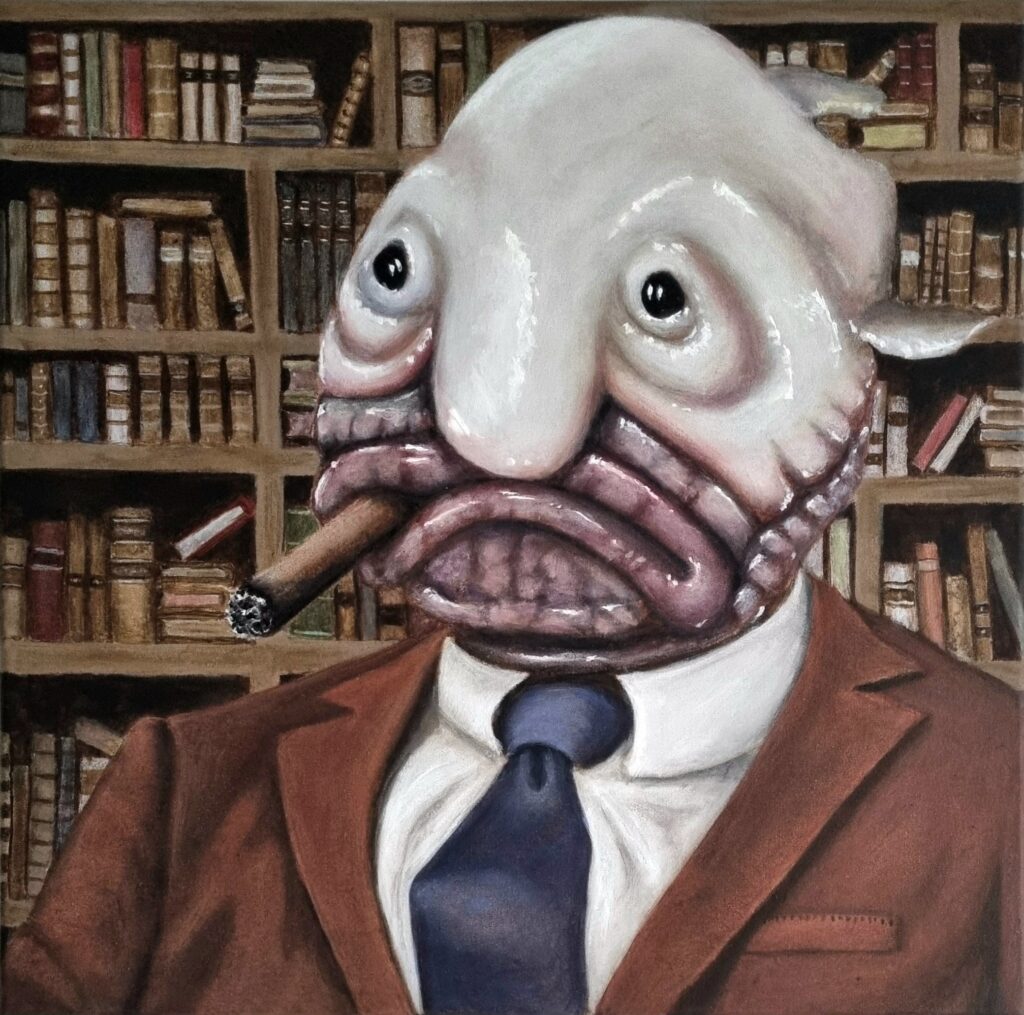
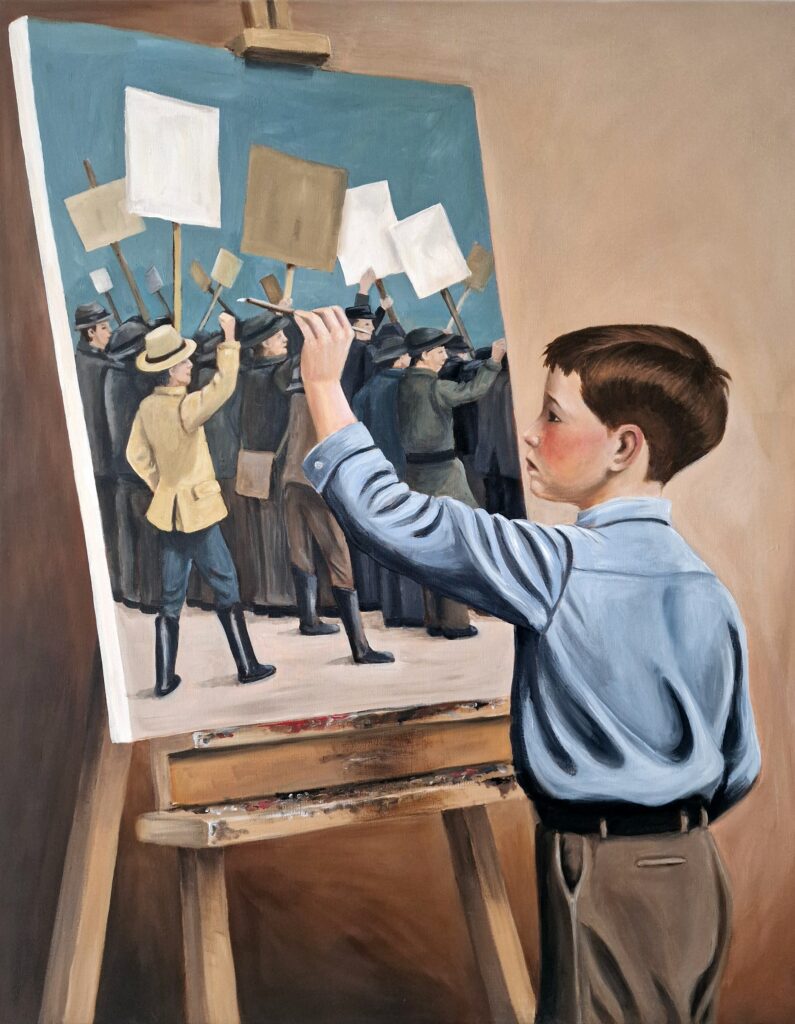
I plan a painting carefully, but not every decision is fixed from the beginning. I often spend weeks thinking about the subject and composition. I consider what truly needs to be shown and what can be left out. That reduction is important to me because I do not want to explain an emotion completely. A gesture or facial expression should be able to hold more than one meaning. For me, tension often begins when a situation appears clear at first but becomes less certain the longer you look.
I also decide on the underpainting in advance, including whether the work should feel warmer or cooler overall. After that, however, I allow the process a great deal of freedom. I enjoy building paintings through layers and glazes, inspired by Old Master techniques. Each layer gives me another opportunity to look and decide what needs more density and what can remain open. Sometimes I move toward opaque or impasto paint during the process. The finished work may therefore look very different from my first idea.
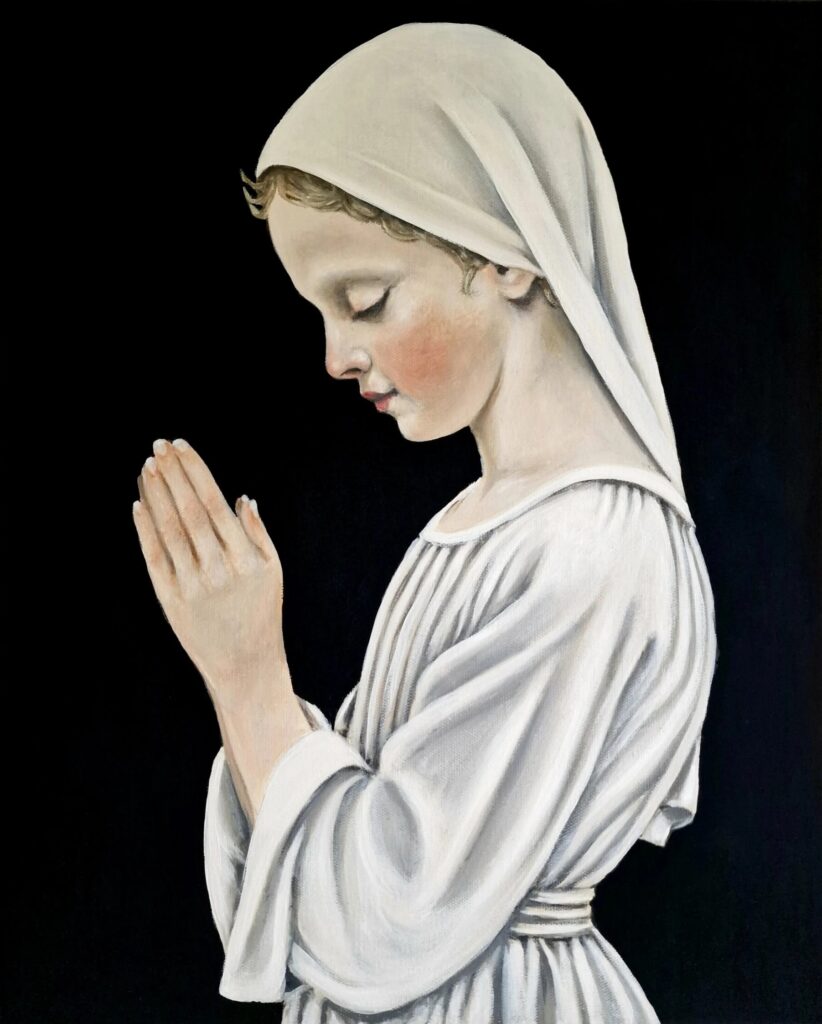
This way of working reflects how I see people. Human beings are layered and contradictory. In some paintings, I leave parts of the underpainting visible or allow figures to remain only partially resolved. In Nackt im Sein (“Naked in Being“) the people appear almost translucent in places, like traces or breaths. To me, this makes them feel vulnerable and not entirely fixed. I usually work with quiet, muted earth tones, greens, and browns. In the skin, however, I deliberately intensify reds, greens, or blues. I am at least as interested in the skin as I am in the eyes. Skin reveals warmth, cold, tension, fatigue, age, and traces of life. For that reason, I do not paint it as perfectly smooth or idealized.
Many of my paintings may still appear beautiful, but beauty alone is not enough for me. I need a small fracture within it: an unexpected skin tone, an open area, a fragile surface, or a gesture that offers no definite answer. Through this combination of reduction and exaggeration, instability, tension, and vulnerability can emerge. While painting, I repeatedly step back and look. I often sense that something is becoming right when it no longer feels merely beautiful, but also creates a slight resistance or discomfort. That may be the point where the work has touched something more truthful than a perfectly smooth representation. That is the moment I try to preserve.
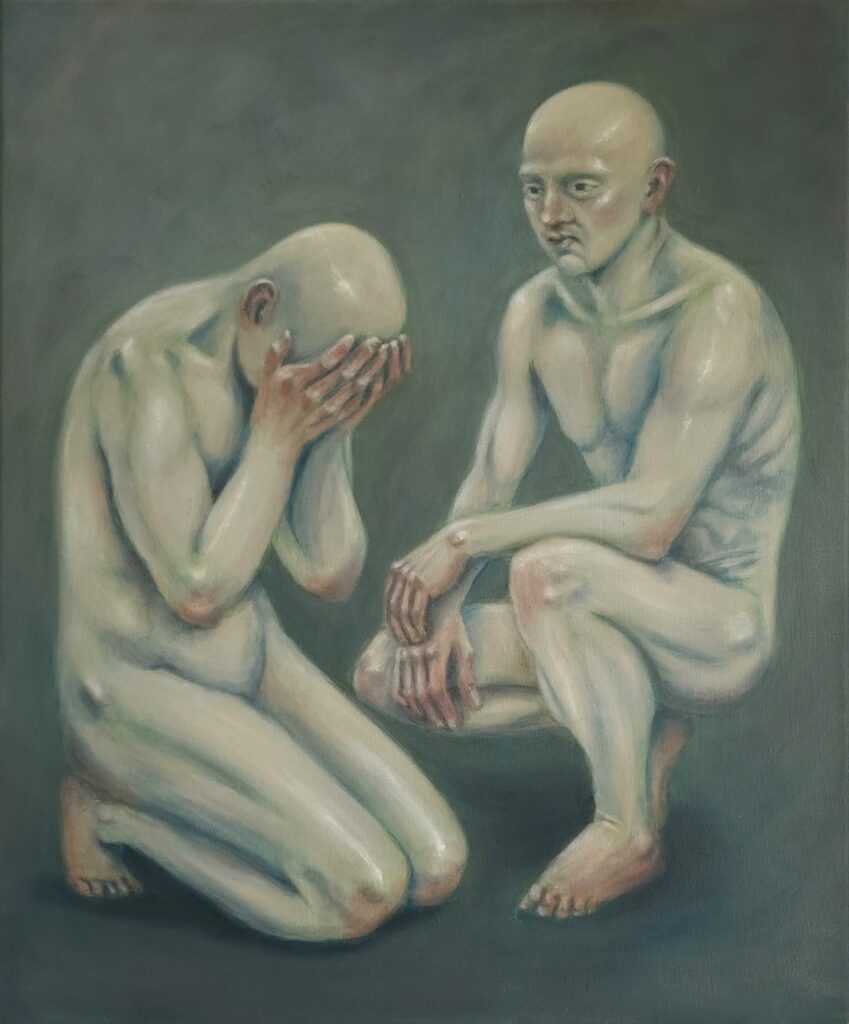
Your recent series Menschsein in Schichten (Humanity in Layers) explores human experience as multilayered, “composed of thoughts, sensations and questions.” The works have accompanying texts, but you’ve said, “Words do not form the foundation of the paintings…they accompany them softly.” What is your process of working with text and visuals? Do the works begin with writing, or does your writing/notes develop in tandem with the paintings?
A work often begins with a thought, a feeling, a question, or a realization that immediately creates another question. I do not believe very strongly in final answers. Something I see in one way today may feel completely different to me a few years from now. When something occupies my mind, I first make notes. They may be individual questions, brief thoughts, or small sketches. They simply help me hold on to something so I can return to it later. They are not yet the texts that will eventually accompany the work.
At some point, I realize that a painting should grow out of this field of thought. Then words recede for a while. I begin searching for a motif that touches the subject but remains open enough not to explain everything. I always write the final title and text only after the painting is finished. Both are difficult for me because a title or text can quickly direct the viewer toward one particular interpretation. At first, I did not want to title or describe some of my works at all. I was far more fascinated by what other people saw in them.
Over time, I understood that people approach art very differently. Some immediately find their own way into a painting, while others need a small point of entry. A title or short text can help with that. My texts are therefore meant to accompany the works, not explain them. They may show where a painting began for me, but they should not determine its final meaning. A painting works especially well for me when it can grow with the viewer. Someone may see one thing in it today and something completely different several years later. In that sense, a work can function almost like a diary, because changes in the viewer also change what they recognize in the painting.
Conversations at exhibitions are important to me for the same reason. I can speak about how a work came into being and, at the same time, hear what others see in it. Those conversations often reveal perspectives I would never have reached on my own. For me, the real magic of art begins when a viewer brings their own thoughts, experiences, and feelings into a painting. My words may encourage that process, but they should never determine it.
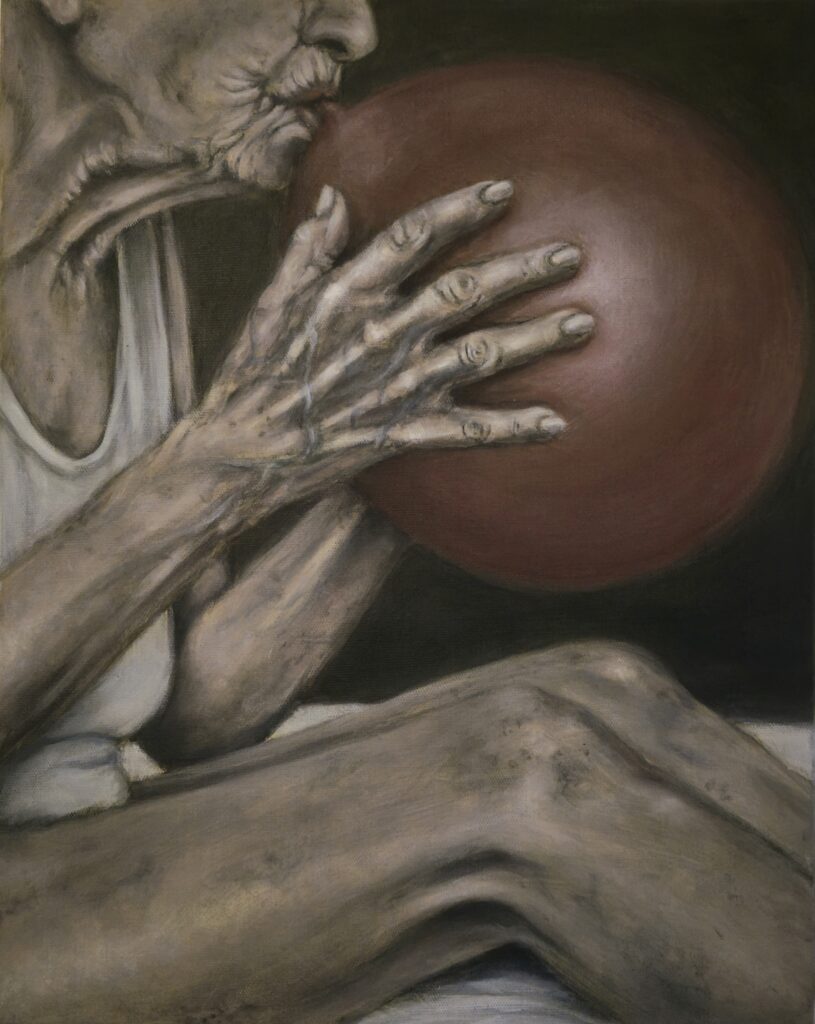
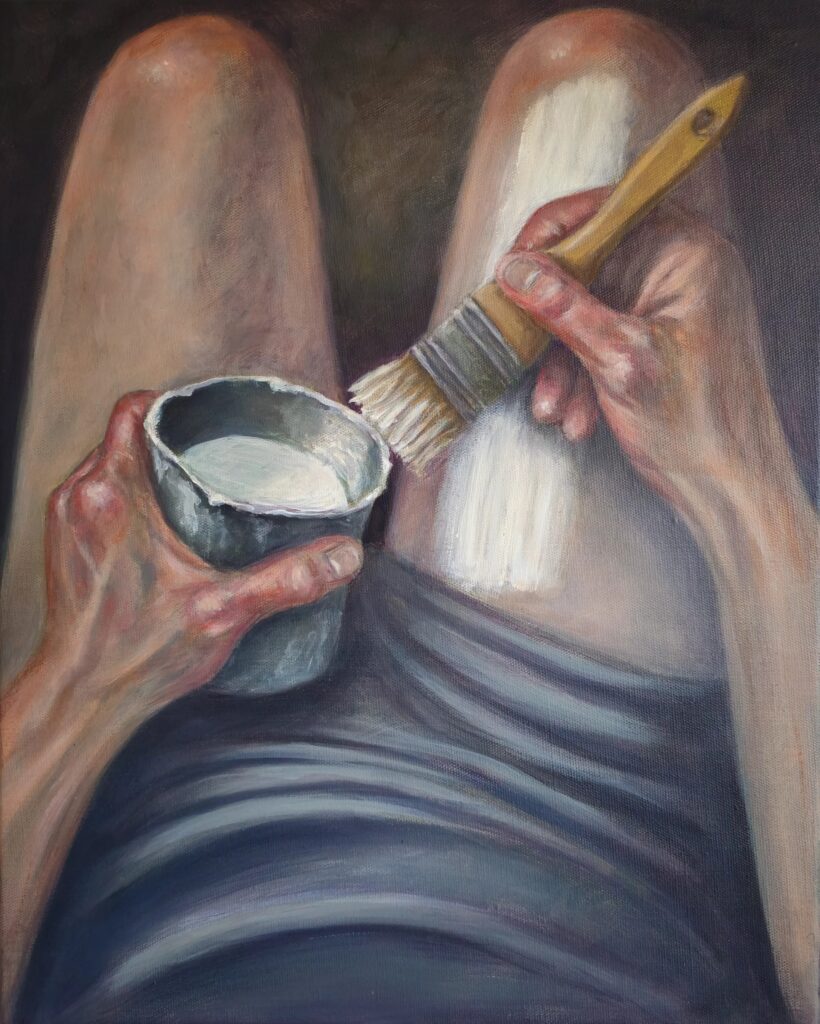
What are your thoughts on the importance of showing nuance in human experience, especially in these times of emerging global political and social polarization and pressures to categorize and pigeonhole people in very black-and-white ways rather than as a multiplicity of identities and individualities?:
I believe people are very quickly placed into categories today. A single statement is often enough to define someone as left or right, good or bad, right or wrong. Especially on social media, there is often little interest in asking who the person behind that statement is, what they have experienced, or how they arrived at their position. That does not mean we have to agree with everything. But a person is never only their opinion. Human beings change, carry contradictions within themselves, and occupy many different roles throughout their lives. I have also held convictions that I later began to question. For me, answers are rarely final.
At the same time, there is enormous pressure to adapt and optimize ourselves. We present a controlled version of who we are, phrase things more carefully, and hide parts of ourselves in order to remain acceptable. Eventually, it can become difficult to recognize what truly belongs to us and what is simply a role we have learned to perform. It is precisely this contradiction, changeability, and vulnerability that interests me in people. Beauty, for me, does not lie in a perfect surface, but in the fact that a human being can never be completely read.
In my painting, I try to make the person behind their role, appearance, political position, or a single action visible again. I do not want to create figures who can immediately be divided into good or bad. I am interested in what lies beneath those quick judgments. Some of my paintings may initially create resistance or discomfort. I do not necessarily see that as something negative. Perhaps someone carries that feeling away and later asks why the work affected or disturbed them so strongly. That can become the beginning of a more honest confrontation with their own prejudices, emotions, and contradictions.
I experience this most clearly at exhibitions. In front of a painting, people who might otherwise never have spoken to one another sometimes begin discussing vulnerability, social issues, or politics. Their views may be far apart, yet they often discover something similar in the feeling underneath. Art does not have to provide a final answer, and I do not believe it can change the world on its own. But it can slow down a first, immediate judgment. Perhaps a conclusion becomes a question. Perhaps someone begins to look at themselves or another person with slightly more nuance.
At exhibitions, when I speak about my paintings and the thoughts that were there at the beginning, people often open up and tell me what they themselves see in the work. In these conversations, you realize how close people can be to one another and how different at the same time. Our perspectives can be far apart, and yet there is often something very similar in the feeling underneath. In front of a painting, people who might otherwise be complete strangers suddenly begin talking openly about feelings, vulnerability, social issues, or even politics. Very often, this happens with a great deal of respect and tolerance. These conversations fulfill me enormously. Afterward, I go home completely full of impressions, questions, and new perspectives. For me, that is an important part of art. It does not have to provide a final answer. It can lead a person to question their first judgment, look at another person in a more nuanced way, or perhaps recognize something about themselves.
I do not want my paintings to show what a person should be. I want to show how multilayered a person actually is, with all their adaptation, vulnerability, contradictions, changeability, and all the things that cannot simply be divided into black and white.
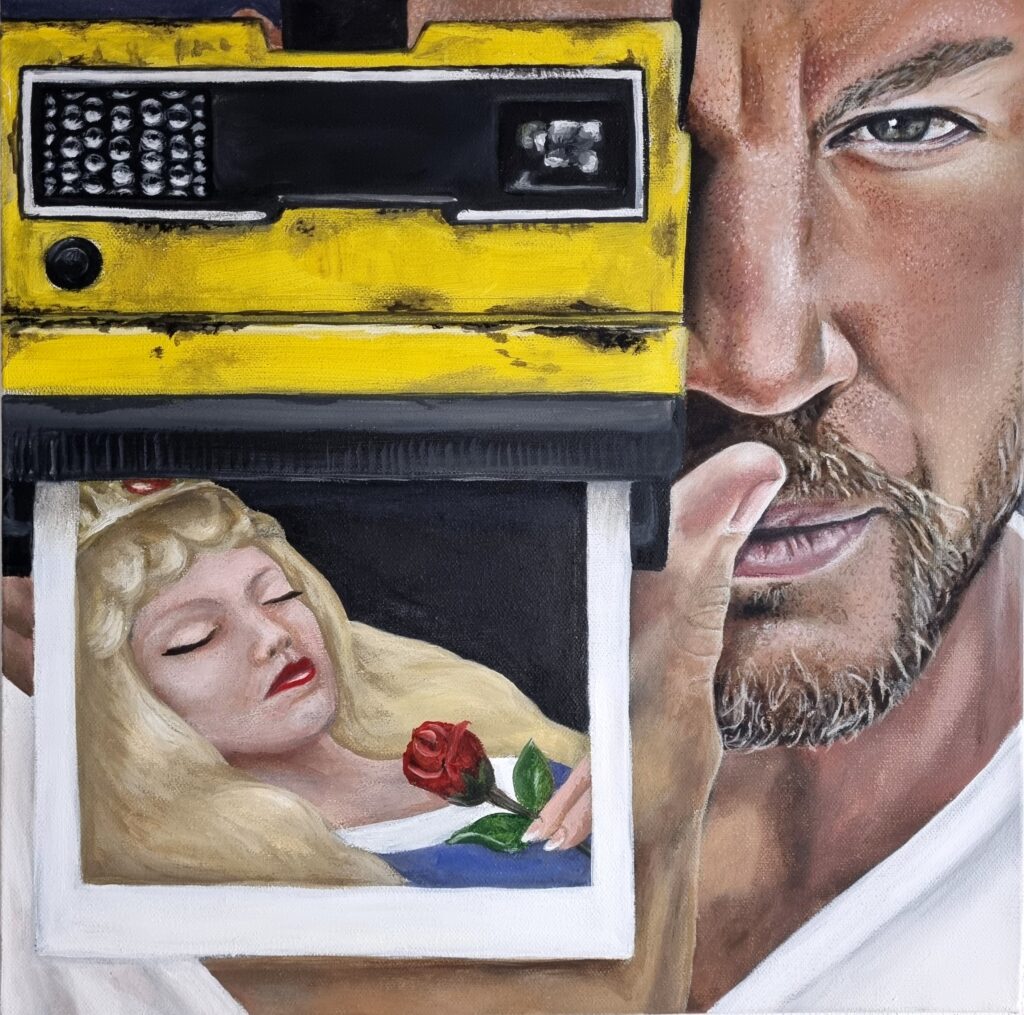
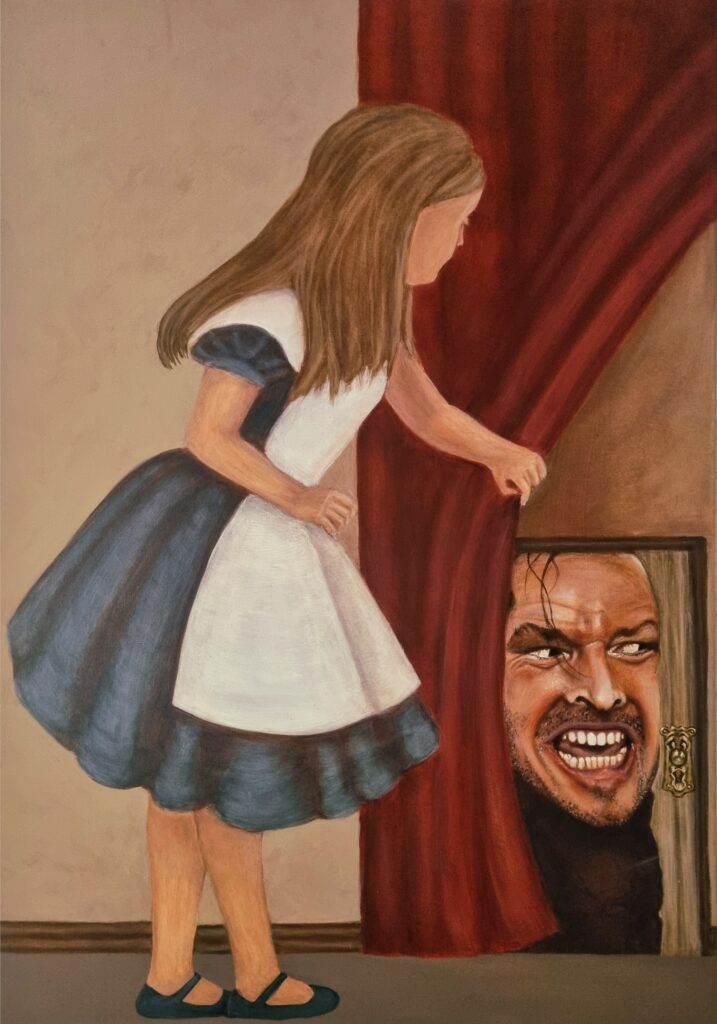
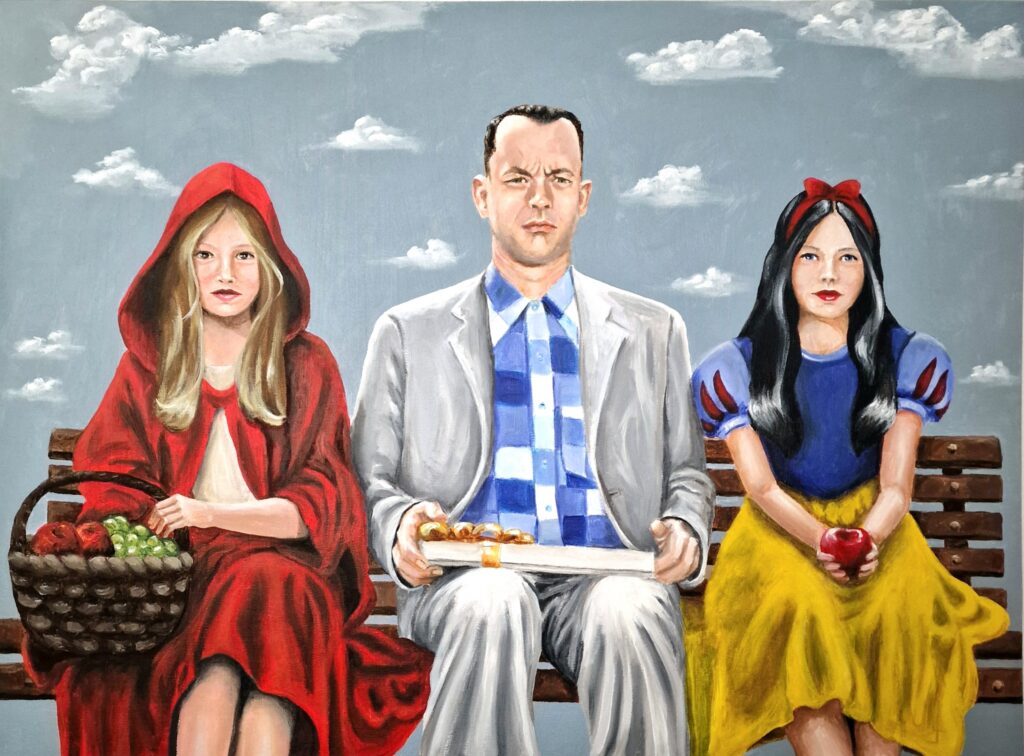
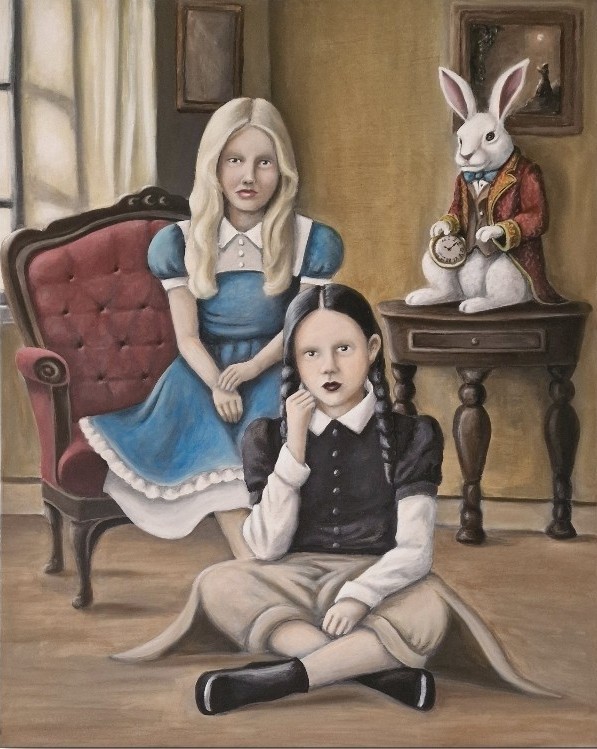
Please discuss your Adapted Art series, in which you explore “familiar motifs from film, animation, and fairy tales in a new and poetic way.” Why do you think that recontextualizing both pop culture and archetypal motifs is important, and what do you hope the viewer will gain from seeing these motifs in fresh ways?
Fairy tales such as Alice in Wonderland, Little Red Riding Hood, Snow White, and Little Thumb have always fascinated me. Many of these stories are remarkably brutal in their original forms. As children, however, we usually perceive that darkness very differently. The stories may feel magical, exciting, or frightening, but we do not yet fully understand what is actually happening within them. That contrast interests me: the naive, childlike view on one side and the cruelty or darkness beneath the surface on the other.
I also wanted to combine two different visual languages. I have always been fascinated by films that bring animation and live action together. In these works, illustrative elements meet a more realistic form of painting. Figures from film, animation, and popular culture also carry established roles and expectations that I can use as a starting point. A familiar figure gives the viewer an immediate way into the painting. Almost everyone already associates something with it: memories, affection, rejection, or an idea of who is good, evil, innocent, or dangerous. Such a figure is never neutral. I use that attention consciously. The viewer recognizes something familiar, is more likely to stop, and looks more closely. But recognition is only the entrance into the painting, not its full meaning.
I remove the figures from their usual context and place them in a new situation. Something familiar can then suddenly feel strange, suspicious, or difficult to read. Why are these figures together? What has happened between them? Is the situation harmless or threatening? Do their roles still match what we believe we know about them? Because I do not answer these questions completely, the viewer begins to fill in the missing parts. I am fascinated by an idea I strongly associate with Hitchcock: that much of the real effect takes place in the viewer’s mind. What is left unseen can be more powerful than a direct depiction.
Each viewer brings their own relationship to the figures into the painting. Earlier memories connect with whatever currently occupies them: personal experiences, emotions, fears, social questions, or psychological themes. From all of this, something like a new film begins to develop in the viewer’s mind. That story often reveals as much about the viewer as it does about the painting. What someone reads into the image is connected to their own memories, experiences, and present inner state. In that sense, the work becomes a kind of mirror.
This is why recontextualizing familiar motifs matters to me. When something appears exactly as we have always known it, we often assume that we already understand it. We stop looking closely. Once a familiar figure appears in an unfamiliar context, that certainty begins to break apart. The villain may no longer be only the villain. The apparently innocent figure may suddenly become unsettling. A scene can feel childlike and threatening at the same time. The viewer has to look again and reconsider their earlier assumptions. I therefore use familiar figures as an invitation at first, and then take away their apparent certainty. A personal story emerges from old memories, the new situation, and the viewer’s own life.
What I hope the viewer takes from the work is not one fixed message. I am much more interested in the way they recognize their own thoughts, experiences, fears, and expectations within it. The story someone creates may reveal as much about their present inner state as it does about the figures in the image. Perhaps the viewer will also begin to look differently at familiar roles and apparently clear classifications. Something that once seemed fixed becomes open again. I hope that this shift encourages people to look more closely, question their first interpretation, and recognize how strongly we complete images and stories through our own experiences.
You are currently showing work in a dual exhibition, Resonance Spaces, with the artist Katja Lohmeyer at Kunstmuseum Malchow, through August 31. What are some of the themes and concepts of this show, and how does the work you have there fit into that? How do you feel your work complements (or counterbalances) the works shown by Lohmeyer?
From the beginning, it was clear that Katja’s work and mine were very different. That was exactly what interested us and one of the main reasons we wanted to exhibit together. When we were looking for a title, we wanted something that felt true for both of us despite our very different visual languages. Resonance Spaces felt natural because it matters to both of us that art creates some kind of response. For me, that response does not have to be pleasant. It can be a feeling, a thought, agreement, irritation, rejection, or curiosity. What matters is that something happens. Because our works are so different, the rooms allow for very different forms of resonance.
We did not plan the exhibition so that each of my paintings would correspond directly to one of Katja’s works. Both positions were meant to stand on their own. Even so, there are connections. Our works remain open enough for viewers to find something of their own within them, and in places we both touch on emotional, psychological, or social themes, though in very different ways. The exhibition includes a broad range of my work, from earlier paintings to recent ones. This allows visitors to see not only my technical development but also the way my visual language has changed. Some earlier works are very direct. In the newer paintings, I have become more subtle and, from my perspective, more courageous in allowing something truthful to remain without fully explaining it. That also relates to the theme of being human, because development and change are essential parts of it.
Katja’s works feel very present and opulent to me. She uses black velvet backgrounds, painted cardboard elements completely covered in resin, and often old, almost baroque-looking frames. Some of the works remind me of Pop Art and feature well-known public figures. Alongside these, she shows what she calls her “soul paintings,” which are created more intuitively and move further into an emotional and psychological space. I often experience her work as more immediately accessible and easier to imagine within a living space than many of my own paintings. I mean that entirely positively. Her works can be decorative and visually powerful while still retaining seriousness. My own work is more strongly figurative and psychological, often quieter, and sometimes more uncomfortable.
That difference creates the tension of the exhibition for me. Katja’s works are often immediate and highly present. Mine tend to be quieter and more fragile and may demand more engagement. Both can touch on similar questions while offering completely different responses. For that reason, our works both complement and counterbalance one another. They complement each other in the desire to create resonance and to leave room for the viewer’s own response. At the same time, they form a clear contrast in visual language and immediate effect.
For me, the exhibition also says something about human individuality: people can feel and express themselves in very different ways while still being close to one another in certain questions. I hope visitors allow both positions to affect them and perhaps notice which works reach them immediately and which continue working on them later.
Some of your work has been acquired for the dd.g collection, which is run by Didi Gstrein and is “devoted to supporting early emerging artists… through acquisitions, exhibitions, and residencies,” and will be presented within the art hotel Mazaggs in Austria (opening late 2026).
How did you come to work with Didi, and in what ways do the paintings chosen for the collection fit into the curatorial vision of the dd.g collection? What do you think are some of the advantages and distinctions of having your work shown in a hotel/resort setting compared to more typical spaces such as galleries and museums? How might people see the work in different ways in that setting?
Didi had posted an open call on Instagram for his Mazaggs art hotel project and the dd.g collection. It immediately interested me, and to be completely honest, I also hoped to be seen and to move forward as an artist. So I contacted him quite directly. He replied in a very kind and respectful way, explaining that it was not quite the right fit at that time. I was completely fine with that and did not expect anything more to come from it. Even so, I continued following his content.
What particularly appealed to me was the openness with which he shares both the thoughts and the emotional perspective of a collector. To me, he looks at artists in an almost holistic way. He is interested not only in the finished work, but also in where an artist currently stands, how they are developing, how confidently they handle their technique, what kind of individual visual language is emerging, and which thoughts lie behind the work. The way an artist presents their path and actively works on their own development also seems important to him. That comprehensive way of looking at an artist appealed to me enormously, certainly also because of my own ambition. It raised a question for me: Am I ready for something like this, and where do I actually stand?
Much of what belongs to being an artist is not immediately visible from the outside. I spend a great deal of time thinking about my development, my texts, exhibitions, presentations, and how to bring my art into the world without turning myself into something I am not. For me, being an artist involves far more than painting alone.
Then I created Nackt im Sein (“Naked in Being”), a work that means a great deal to me personally. I suddenly wanted to share that particular painting with Didi. At that moment, it was no longer mainly about being represented in the hotel or the collection. I wanted to know how he experienced the work and whether it moved him as well. He responded very positively and asked me to show him more of my favorite works. Because of the distance, we first had a video call. Later, we met in person, and I presented several paintings to him.
He asked very different questions about the works, my process, my development, and the thoughts behind them. I genuinely enjoyed that. Especially as a self-taught artist, it felt significant to speak about art with someone who looks very closely and knows the field well. I find it deeply interesting to explain the path toward a painting, its personal story, and my motivations, and then to experience what the work does to the collector.
From my perspective, the video call and our personal meeting created trust on both sides. Eventually, five works were selected for the collection. Of course, I cannot speak for Didi or say which individual point was decisive. My impression is that the overall picture felt right: the works, their visual language, my development, the thoughts behind them, and the way I approach my path as an artist.
When it comes to how my work fits into the curatorial direction of the dd.g collection, I can again only speak from my own impression. The collection is broad. Alongside painting, it includes sculpture, installations, and other forms of artistic expression. Even within painting, abstract, figurative, conceptual, more immediate, and more subtle positions exist alongside one another. That openness fascinated me from the beginning. The collection is not looking for one uniform visual language. Very different forms of contemporary art are allowed to coexist.
From my perspective, my work fits that direction because it often deals with psychological, emotional, and sometimes socially critical questions. The motifs are not chosen arbitrarily; they usually grow out of longer thought processes, questions, and personal observations. At the same time, I am still in a clearly visible phase of development and work very consciously to continue along that path. That combination of an individual position, recognizable determination, and an ongoing development seems to fit the collection well.
I also find the connection between the hotel and the separate exhibition building being created directly beside it especially strong. Art will be present throughout the hotel, but it will also have a space devoted entirely to it. This means the works will not simply disappear into the hotel’s design or interior.
The exhibition area will be approximately 200 square meters, with a ceiling height of around 4.5 meters. Regularly curated group and solo exhibitions are planned there. This will allow the works to stand on their own and be viewed in a focused setting.
My impression is also that Didi builds a genuine connection with the artist and is not interested only in acquiring an individual painting. As an artist, one naturally receives that kind of attention and support with gratitude. It makes me feel seen not only through my work, but also taken seriously in my development, and very comfortable in this collaboration. The combination of the hotel and its own exhibition space allows for almost two different forms of encountering art. In the separate building, there will be the concentrated atmosphere of an exhibition space. People may come specifically for a show and consciously take the time to engage with the work. That is closer to the experience of visiting a gallery or museum. In the hotel, however, the works will also be encountered by people who may simply be on holiday, looking to relax, or who may not previously have had any particular connection to art. That is what I find especially exciting. I have already met people who believed they had no interest in art and then became curious after encountering my paintings.
For some people, art can seem elitist. To me, it is not. It is, first of all, a form of expression. Even when a work has a high price or belongs to a collection, art does not stand above the human being. In a hotel, it can become accessible in a very natural way. No one has to feel that they need special knowledge or must deliberately enter a gallery. They do not have to look. They can look. Perhaps a guest passes a painting without paying much attention at first. Later, they encounter it again, and by the third or fourth time they notice something they had not seen before. The work can reveal itself slowly and become part of a stay, a mood, or a memory.
With my own paintings in particular, that repeated encounter may be interesting. Some works do not reveal themselves fully at first glance. Something may initially feel strange or uncomfortable and only begin to occupy the viewer later. The hotel may therefore reach people who would never have deliberately visited a gallery or museum. At the same time, the separate exhibition building offers the opportunity to view art consciously and with full attention. That is exactly what I find so successful about this connection: art becomes part of the experience of a stay while still remaining visible and being taken seriously as art.
You don’t live and work in a major art market center with a gallery representation system such as New York, London, or Berlin, and instead you are building a collector base through other channels, such as the dd.g collection/Mazaggs, local/regional art fairs (such as KunstOffen in Mecklenburg-Vorpommern), and you also sell no prints or reproductions. What attracted you to this unconventional model of building an audience and reaching collectors? Why do you think this approach works best for you personally and may resonate more deeply with certain buyers?
I did not consciously decide against galleries or the traditional art market. My path developed mainly out of the reality of my life. I do not live in an art capital or a major urban center, but in a small town in Mecklenburg-Western Pomerania, in an area that feels almost rural. The structures here are simply different. It is harder to build contacts, visit galleries spontaneously, or regularly take part in exhibitions in larger cities. I am also very involved in family life. Many things are possible, but they have to be planned well in advance and carefully considered for their manageability. I cannot simply decide at short notice to travel somewhere and visit several galleries. And to be honest, I would not want to approach them indiscriminately anyway. So I began working with the possibilities available to me and built my path step by step.
I value the freedom this path gives me. No one is standing behind me telling me which works might perform better or be easier to sell. Although I would not allow myself to be guided by that anyway. It is one of my basic principles. When I paint, I want to follow what is trying to emerge from within me, not what is expected from outside. That may make me seem difficult in a gallery context, and perhaps it will make my path harder. But this is not something I want to compromise on. This does not mean that I reject galleries. On the contrary, I am very interested in the art market and in understanding how it works. Some aspects fascinate me, while others are difficult for me to understand and sometimes seem genuinely absurd. I can certainly imagine being represented by a gallery one day. For me, that would be one possible form of collaboration, but not the only condition for continuing my path as an artist.
Museum exhibitions and exhibitions in larger cities also mean a great deal to me. I genuinely love exhibiting because encounters with people, their reactions, and conversations about the work give me so much. I would not want to lose that direct connection with collectors, art lovers, and exhibition visitors, even if my path later also included gallery representation. Regional events such as KunstOffen are therefore much more than opportunities to be seen. They allow me to speak directly with people about art and sometimes reach people who previously believed that art had nothing to do with them. When that turns into curiosity, I find it especially meaningful.
It matters to me to show that art does not have to be elitist. It is first of all a form of expression that anyone should be allowed to experience in their own way. No one needs art-historical or technical knowledge in order to look, feel, be unsettled, reject something, or be moved by it. I have also learned that where you live does not automatically define the limits of your visibility. My work is offered through Leah Do in New York, and the NDR feature also showed that art from Mecklenburg-Western Pomerania can reach a much wider audience. It is possible to be noticed far beyond your immediate surroundings, even when you are working from a more remote region.
That requires an enormous amount of work. You have to educate yourself, search for opportunities, build contacts, think carefully about writing, presentation, and public communication, withstand setbacks, and keep going. Especially in Mecklenburg-Western Pomerania, the path toward larger art centers is not necessarily the most obvious or the easiest one. But that difficulty also has a certain appeal for me. I am very ambitious and I love challenges. Building things slowly also allows me to look back and recognize what I have already achieved through my own efforts. Should gallery representation eventually grow out of this, it would not simply have happened by chance. It would be part of a path I had already built myself. My decision not to offer prints or reproductions is also part of my approach.
I do not think there is anything wrong with artists selling limited editions, postcards, calendars, clothing, or other reproductions. I fully understand both the artistic and economic reasons for doing so. For me personally, however, the idea feels wrong—almost painful. When I create a painting, a connection develops that I find very difficult to put into words. It ranges from a deep sense of closeness to an almost excessive respect for what is coming into being. At times, it feels nearly sacred to me. Perhaps this is where I fit slightly into the category of the strange or “mad” artist, because I cannot fully explain why a work takes on such importance for me while I am creating it. I want the idea, the feeling, and that specific moment of creation to remain contained in that one painting. I want it to exist only once.
At the same time, I do not paint the works for myself. They are intended for the outside world from the beginning—to be seen, to cause something in another person, and perhaps to find their place with someone else. Once a work is sold, it truly becomes that person’s painting in my mind. It is no longer “my painting in their home.” It is their painting, which I painted. That distinction matters greatly to me. Still, the moment in which it was created remains unique. Even if I were technically able to paint the same motif again, it would not be the same work. It would come from another moment, another inner state, another movement, and another kind of passion. To me, it is similar to a great love. There can be another great love later that is just as deep and meaningful, but it can never be the same one. Something similar may happen again, but that exact moment or feeling cannot be reproduced. That is how I experience my paintings as well. A new work may become equally powerful, but that one artistic moment exists only once.
I am fully aware that this is the more difficult choice economically. Prints or editions could provide more regular and predictable income. Of course, I have considered that practical side of it. But I simply cannot make that choice for myself. I accept the financial consequences because this feels better in relation to both my art and the people who collect it.
When someone acquires one of my paintings, they receive the only material expression of that particular moment, feeling, and creative process. There is no smaller version, no edition, and no second, almost identical work. I think of that uniqueness almost as something additional that is passed on with the painting: the knowledge that this idea and this passion exist only in that one work. A deeper connection to a work can develop in different ways. Some collectors prefer to remain very private or as anonymous as possible, and I fully respect that. Not everyone is looking for contact with the artist, and they do not need to be. For others, however, that exchange is very meaningful. They may want to know how a painting came into being, what I was thinking, which techniques I used, or whether part of my personal history lies behind it. I am always very happy to answer those questions.
A viewer may already have built an entire world of their own within the painting and given it a deeply personal meaning, while still being curious about what was going on inside me when I created it. When I share that openly, my story does not replace their interpretation. It simply adds another layer. Especially when I share something personal, a different kind of connection to the work can emerge. For some people, that is very meaningful. In that moment, perhaps you are passing on more than “just” an artwork. I believe this path may resonate particularly with people who do not only want to acquire a finished object. They may also want to know the story behind a work, witness the development of an artist, or feel that they are accompanying part of that journey. This model is slower, less predictable, and probably more demanding than an already established sales system. But it suits me. It combines independence, personal encounters, and unique works while allowing me the freedom to create according to what is trying to emerge in the art itself.



Be the first to comment