
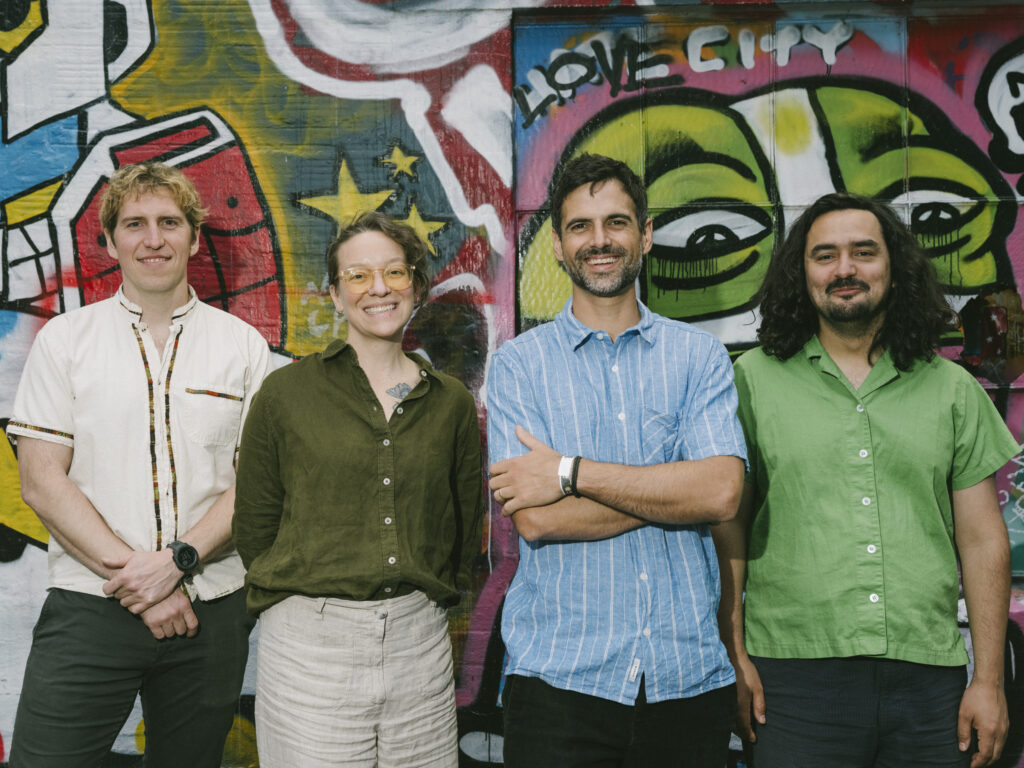
Terror/Cactus is the project of Argentine-born producer and multi-instrumentalist Martín Selasco. Born in Buenos Aires, raised in Miami, and now based in the Pacific Northwest, his work draws from a wide range of Latin American musical traditions – Argentine folk, Peruvian chicha, Colombian cumbia- woven into hypnotic electronic production shaped by psychedelic guitar, field recordings, and dub-influenced textures. The result is a sound that moves fluidly between cultural landscapes, rooted in tradition but oriented toward something more exploratory and unbound.
In this interview, Selasco talks about his new album Colapso. Influenced by ongoing dialogues about migration, cultural memory, and resistance, Colapso frames collapse as a generative act, where breakdown becomes a catalyst for reinvention, and sound acts as a transmission between worlds. Across the record, fragments of urban life – street recordings, passing voices, ephemeral moments – interweave with ancestral and atmospheric elements, creating a sense of movement between past and future, city and landscape.
You have deep family roots in music connecting you to your Argentine cultural lineage, with your grandparents founding the label Music Hall in the 1950s and your father founding the independent record label, ANS Records, in Miami. How did growing up with these musical roots and interacting with the archives of these labels help shape your own growth as a musician and your approaches to songwriting?
My family history in the music business in Latin America helped me feel a direct connection to parts of my cultural heritage that could have otherwise been lost through immigration and assimilation. Music became a point of connection and a way to deepen my relationship with my roots.
I remember digging through CDs in my dad’s warehouse and discovering Argentine folclore artists such as Atahualpa Yupanqui, Mercedes Sosa, and Eduardo Falú around the same time that I was listening to punk and grunge, while living in Miami surrounded by salsa and merengue. Those influences all became part of the musical language I was absorbing, and that naturally found its way into my songwriting.
So, when I compose music, I tend to draw from all of those influences at once. I fingerpick guitar and use patterns and chords from Argentine folclore, but I play them on electric guitar with overdrive, vibrato, and delay, then weave in the tropical rhythms.
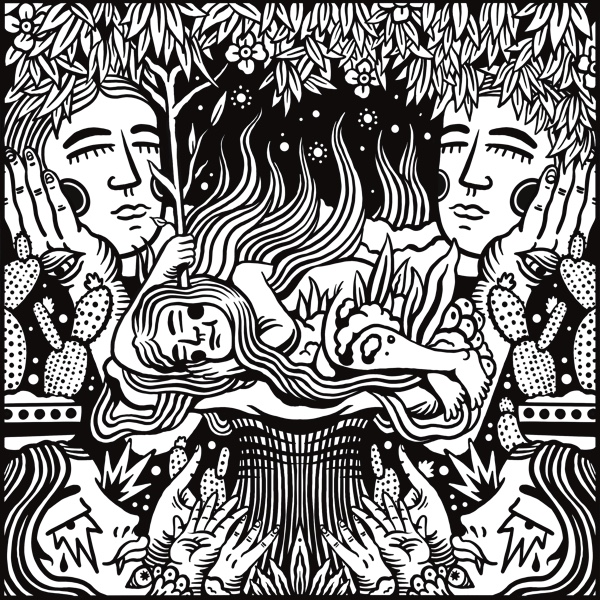
While your previous album, Forastero, has been described as looking inward, your new album, Colapso, is described as more outward-looking. How has your sound evolved since Forastero, in terms of exploring more political and cultural systems? What kinds of music techniques do you use to express this sense of reaching out and examining/exploring?
When I produced Forastero, I was really looking to explore these dark mystical sounds that would also feel really powerful on the dancefloor. As you mentioned, it felt inward-looking and nostalgic, leaning a bit more on the melancholic Argentine folclore influences which often contain themes about belonging and migration.
With Colapso, I was beginning to feel that parts of Latin electronic music had become overly associated with a kind of exoticized escapism—music consumed as a backdrop for wellness and luxury retreats rather than as a vehicle for expression and connection. All of this at a time when immigrant communities were being attacked. I wanted to push back and create something that felt a bit more disruptive, while reflecting both the chaos and beauty of real life.
In producing the record, live drums and saxophone became a big part of expressing that shift. They bring a sense of spontaneity and physical energy that I really wanted to capture. I drew a lot of inspiration from Latin American cities, often using field recordings of urban life as a starting point for compositions. I explored some colorful chords and melodies that were inspired by bank heist or spy movies to give it a sense of mystery and danger.
A unique thematic element of Colapso is its exploration of collapse as a generative force and a catalyst for change. How do you work to inspire a sense of renewal/rebirth from destruction on this album? Why do you think it’s especially important now for people to see what appears to be a society at an end point and instead view it more as a point of positive change or transformation?
My intention isn’t to celebrate collapse, but rather to question the assumption that existing systems are permanent or inevitable. Periods of turmoil and upheaval can reveal a need for new ideas, new communities, and new ways of relating to one another. While collapse can have a dark side, it can also reveal possibilities and inspire people to come together to seek change.
You will be touring in late June through July. Could you talk about how you plan to present these songs live, who will be playing with you, and what their contributions to the live experience will be?
I’m really excited to be playing these songs live with many of the musicians who are on the recording. We’ll perform them as a live four-piece band while still incorporating the immersive elements of electronic production such as synthesizers, samples, and effects. David French will be playing drums, Mike Gebhart will be on percussion, Kate Olson will play wind instruments, and I will play electric guitar and trigger samples and effects.
Colapso is out June 12, 2026.
Terror/Cactus Tour Dates:
June 18 – Seattle, WA @ Baba Yaga
June 19 – Portland, OR @ Swan Dive
July 24 – Lärz, DE @ Fusion Festival
July 02 – Berlin, DE @ Rotbart
July 18 – Leavenworth, WA @ Icicle Creek Center for the Arts
July 23 – Carnation, WA @ Timber! Music Festival
July 31 – Happy Valley, OR @ Pickathon
Visit the Terror/Cactus site for tickets


Be the first to comment