
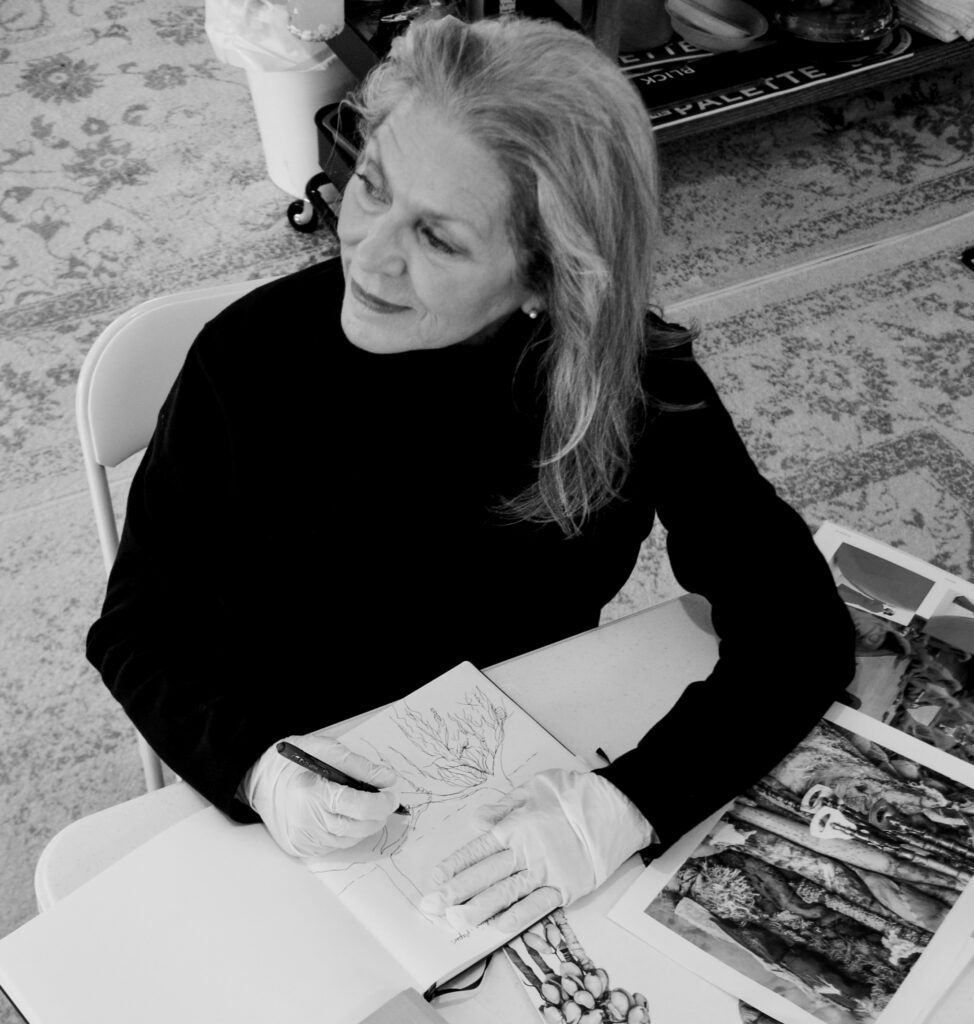
Karen Mosbacher is an interdisciplinary artist whose work integrates painting, photography, installation, sculpture, and collaborative performance. Influenced by synesthetic perception, she approaches sound and emotional states as chromatic structures, translating music, memory, and affect into visual form. This perceptual framework shapes the tonal and emotional architecture of her work across media.
Her practice is anchored in two major bodies of work. SŌ SÓ MĒ: The Science of the Sound of Music and Emotions present large-scale chromesthetic paintings that explore the physics and felt experience of sound through expansive compositions reaching up to 6’ x 7’. These works investigate how music inhabits the body and how emotion can be rendered structurally in color and form.
From 2020–2024, Mosbacher developed Collateral BEAUTY, a four-year body of work that marked a significant expansion of her practice into interactive installation, photography, and sculptural intervention. Examining silence, endurance, and embodied sovereignty, this series deepened her interdisciplinary integration and laid the conceptual groundwork for her current work.
The Work of Resilience: Living Systems extends that trajectory. Rooted in painting and expanded through altered photography, material intervention, installation, and collaboration with dancers, this body of work examines resilience as interdependence — considering how individuals, communities, and natural systems sustain one another through connection, care, and creative presence.
Mosbacher’s paintings translating the compositions of Dr. Ofer Ben-Amots are archived in The National Library of Israel in Jerusalem. She was part of a Heartland Emmy®–winning team for the short documentary essay I Paint Music, serving as writer, art director, on-screen artist, and curator of its musical score, and was nominated for an Emmy Award for the script of Collateral BEAUTY: No More Silence. She is represented by JRB Art at The Elms in Oklahoma City and Platte Collections in Colorado Springs, with exhibitions in Europe, London, and across the United States. She is actively seeking gallery representation and commissioned projects.
Mosbacher lives and works in Colorado Springs, Colorado.
The Work of Resilience: Living Systems explores connection at both the human and ecological level. Has that body of work changed the way you think about what it means to “make the invisible visible”?
The Work of Resilience changed my understanding of what it means to make the invisible visible. Earlier in my career, I was exploring sound waves, energy, movement, emotional vibrations, and sensory experiences that can’t easily be put into words. Now, I ask a deeper question: What makes us who we are?
I came to understand that our identity, emotions, values, and way of moving through the world are largely invisible, yet they shape every decision we make. Resilience is not simply the ability to endure hardship. It is the ongoing practice of remaining connected to your authentic self while the world continually pushes you in other directions.
That realization changed both my life and my studio practice. Making art is no longer only about giving form to what I perceive. It is also about creating space to explore who I am, how I express myself authentically, and how my relationships with others and the natural world become visible through the choices I make. In that sense, the work itself has become an act of resilience.
What determines whether an idea becomes a painting, photograph, installation, or performance?
Everything begins with listening, writing, and research. Music is often the catalyst, even when I’m working within a specific theme. At the same time, I’m reading, studying, sketching, and asking questions. I don’t begin by deciding whether something will become a painting, a photograph, an installation, or a performance, unless it is a commissioned project.
Music gives me the emotional and energetic structure of the work, while research provides the intellectual framework. Whether I’m exploring resilience, the natural world, or the overlooked women whose observation and experimentation helped lay the foundations of modern science, those two paths begin to intersect. Then the materials begin to reveal their possibilities. Earth pigments, paper, photography, thread, dancers, paint, and sculpture each carry a different kind of expression.
The medium emerges from the conversation between those elements. Photography is a process I love to use to work through my visions. Other times the experience asks for paint, gesture, texture, or sculptural materials. If the work is about relationship, movement, or shared experience, dancers often become collaborators, and the work expands into performance or installation.
I don’t try to force an idea into a predetermined medium. I let the concept, the emotional experience, and the materials reveal the form the work is meant to take.
You’ve worked closely with musicians rather than simply responding to music after the fact. What do those collaborations allow you to explore that you couldn’t in the studio alone?
Live collaboration allows me to enter the life of a piece of music at different stages. Sometimes I’m invited into the compositional process while the work is still being written. With composer Ofer Ben-Amots, for example, I’ve listened to works in stages as they were being composed. Other times I enter through rehearsal and performance, experiencing the music alongside the audience as it comes to life.
Those opportunities are rare, and I never take them for granted. Composing is often a deeply private process, so being invited into that creative space before a piece is finished is an extraordinary privilege, especially as someone who isn’t a musician.
Whenever possible, I begin with the composer. I want to understand their intention, either through conversation or through the composer’s notes. Then I spend time with the performers. I ask for recordings well in advance so I can study not only the composition, but also the musicians’ interpretation. Two ensembles can perform the same score beautifully yet reveal entirely different emotional landscapes.
I prepare for the performance much as the musicians do. I create my own visual score from the colors, shapes, textures, and layers I perceive in each instrument and throughout the movements of the music. I pre-mix paints and organize my materials because there isn’t time to make those decisions while painting live. During one collaboration with the Apollo Chamber Players, I noticed them watching me prepare my paint table while they tuned their instruments. I heard the audience giggling and turned around to see broad smiles on the musicians’ faces. They were fascinated that I had developed my own version of sheet music and prepared for the performance in much the same way they prepared before drawing the first sound from their instruments.
Once the performance begins, everything becomes wonderfully alive. No matter how much preparation happens beforehand, musicians never perform a piece the same way twice, and neither do I. I respond to their interpretation in real time. The music, the musicians, and the painting influence one another in ways that simply can’t happen in the studio. That is what makes live collaboration so exhilarating.
Every performance becomes a conversation rather than a translation.
If two musicians perform the same composition differently, what most changes what you see?
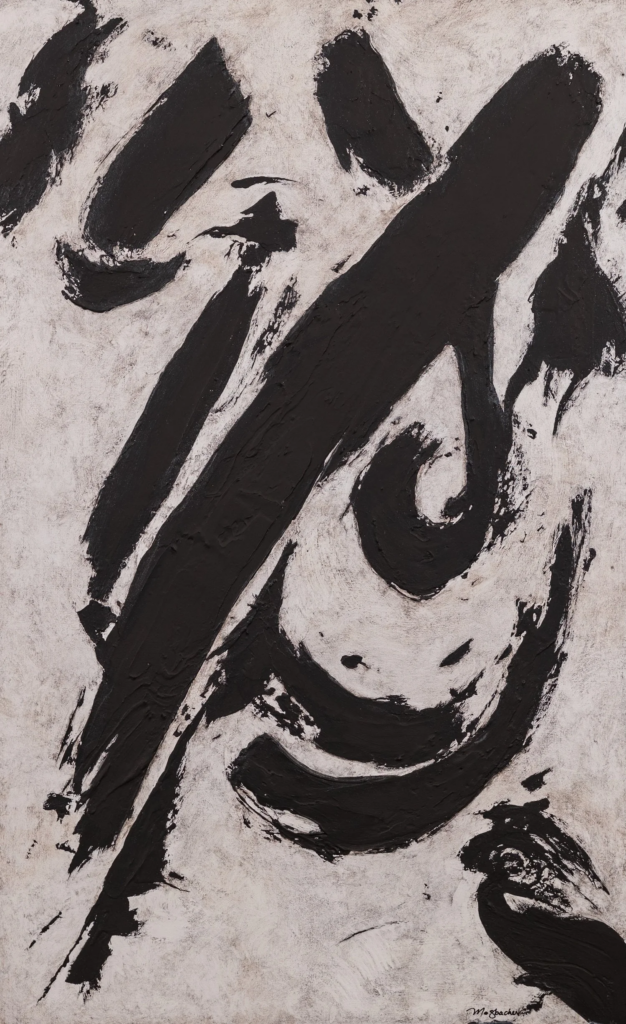
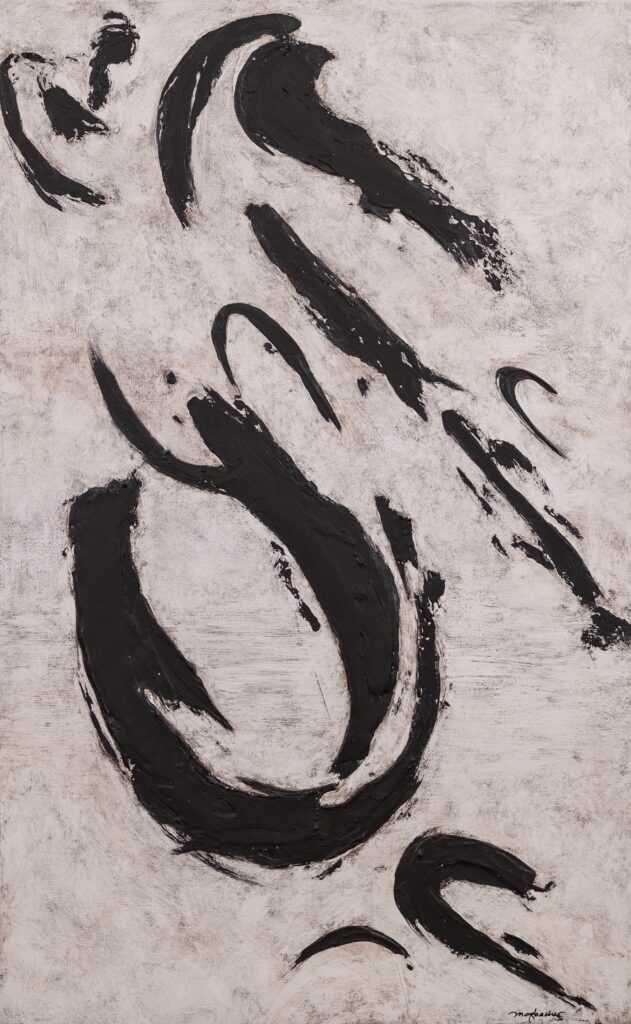
Everything changes. Even when two musicians perform the exact same composition, they never produce exactly the same sound. Their instruments are different. They were built by different makers, from different woods, with different strings, bows, and setups. Each musician also brings a unique touch, pressure, phrasing, and emotional expression. All those factors shape the vibration and timbre of the music.
Those differences become visible through my chromesthesia. The colors, shapes, textures, and movement that I perceive change. The notes may be the same, but the visual experience is not.
I’ve explored this very intentionally. My son is a violist, and I’ve asked him to perform the same piece on two different violas with the same bow. Although the performer and the bow remained the same, the instruments produced different visual experiences because their voices were different. That confirmed something I had been noticing for years. Subtle changes in the character of an instrument can alter what I see.
I’ve spent time studying why that happens because I wanted to better understand my experience. The more I’ve learned about sound, vibration, and the individuality of instruments, the more I appreciate that no two performances are ever truly identical. That’s one of the reasons every painting becomes unique.
You’ve described your work as translating experiences that are difficult to put into words. Did your background in divinity influence the questions you ask through art, even if it doesn’t appear directly in the work?
Yes. My background in divinity influences the profound questions I ask through art, but perhaps not in the way people might expect. My studies were never only about religion. They continue to inform my understanding of the human condition through history, philosophy, spirituality, music, art, and the enduring questions human beings ask across cultures and centuries. I live comfortably with mystery, remain curious, and ask deeper questions rather than rush toward simple answers.
My work isn’t religious. I find meaning in ritual and ceremony because they mark change, loss, celebration, and transformation. Ritual, whether through journaling, meditation, or other practices, reminds me to pay attention, remain curious, and notice the moments that shape a life.
My near-death experience several years ago changed the way I move through the world. My perceptions and sensitivities are heightened, and I pay close attention to sound, color, movement, relationships, emotions, and the quiet details that others often overlook.
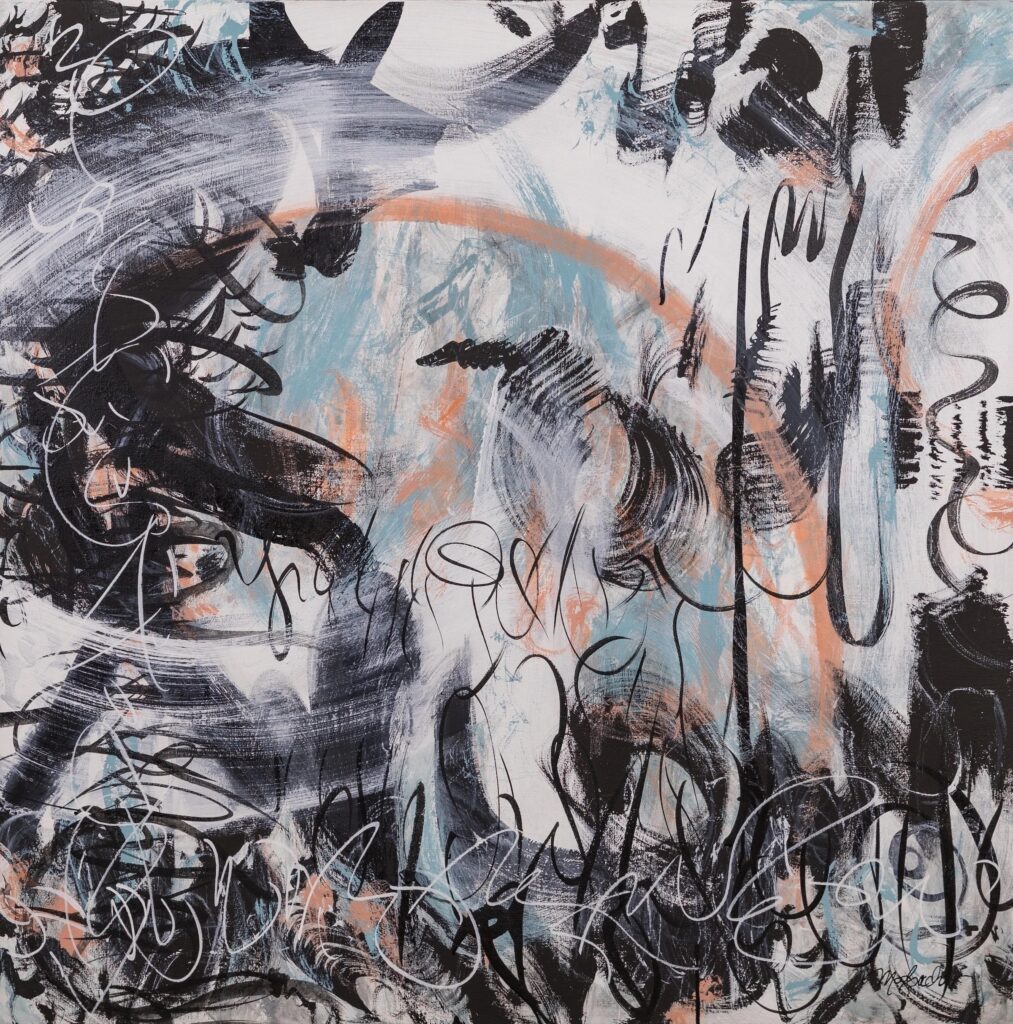
Some emotions and experiences simply have no language. At times, my work moves beyond written words into a symbolic lexicon. These symbols are channeled through the creative process and carry a history stored deep within my soul. They allow me to express experiences that words alone cannot hold.
Has there ever been pressure to make your visual language more legible, or has ambiguity always been an essential part of the work?
I’ve never felt pressure to make my visual language more legible because it emerges authentically through my creative process. If I tried to explain everything literally, the work would lose something essential. Curiosity.
People often ask whether I know what the symbols mean. Some of them I do. Others continue to unfold over time. I’ve become increasingly interested in how symbols carry meaning beyond words, and it’s fascinating to see recurring forms that echo ancient visual languages across cultures and history.
Symbols are one of humanity’s oldest forms of communication. Long before written language, people carved, painted, and inscribed symbols to express ideas, beliefs, memories, and relationships. We still do it today. Every company logo, road sign, map, and icon on our phones relies on symbolic language to communicate something larger than words alone.
Ambiguity invites curiosity. I don’t expect viewers to decode my symbolic language. I hope they experience it the way they experience music, where meaning emerges through feeling, memory, and personal association rather than literal translation. Ambiguity isn’t something I add to the work. It’s part of the work itself. Mystery invites curiosity, and curiosity invites deeper looking. I don’t want to tell viewers what to think. I want to create enough space for them to enter the conversation with their own experiences.
Several of your recent works seem to shift the focus from individual perception to relationships between people, sound, and the natural world. What prompted that evolution?
My heightened perceptions have led me toward the broad study of relationships. The more I practice paying attention, the more I recognize that very little exists in isolation. I continue to discover the importance of human connection. Music exists through the relationship between notes.
Nature flourishes through interconnected living systems. Human beings are shaped by our relationships with one another, especially when we gather in person. I’m increasingly interested in collaboration, community, and how music, people, and the natural world continually influence one another. Those relationships have become the questions I explore through my work.
Your paintings often suggest movement without depicting it directly. Do you think abstraction can communicate something that language can’t?
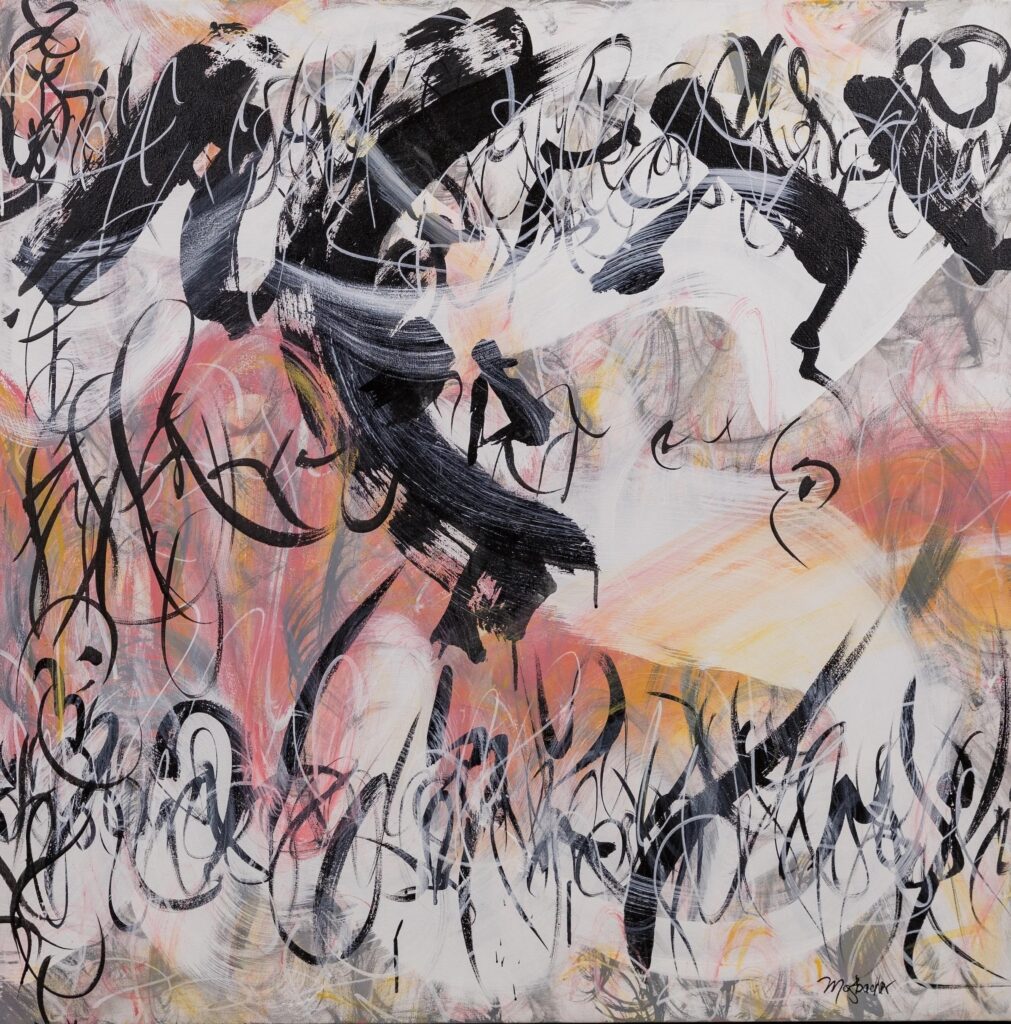
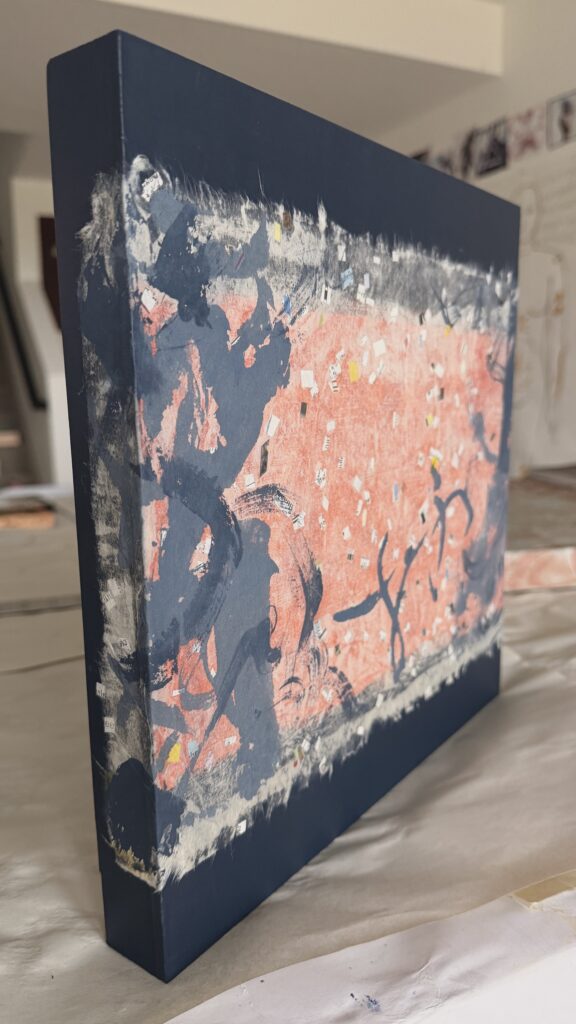
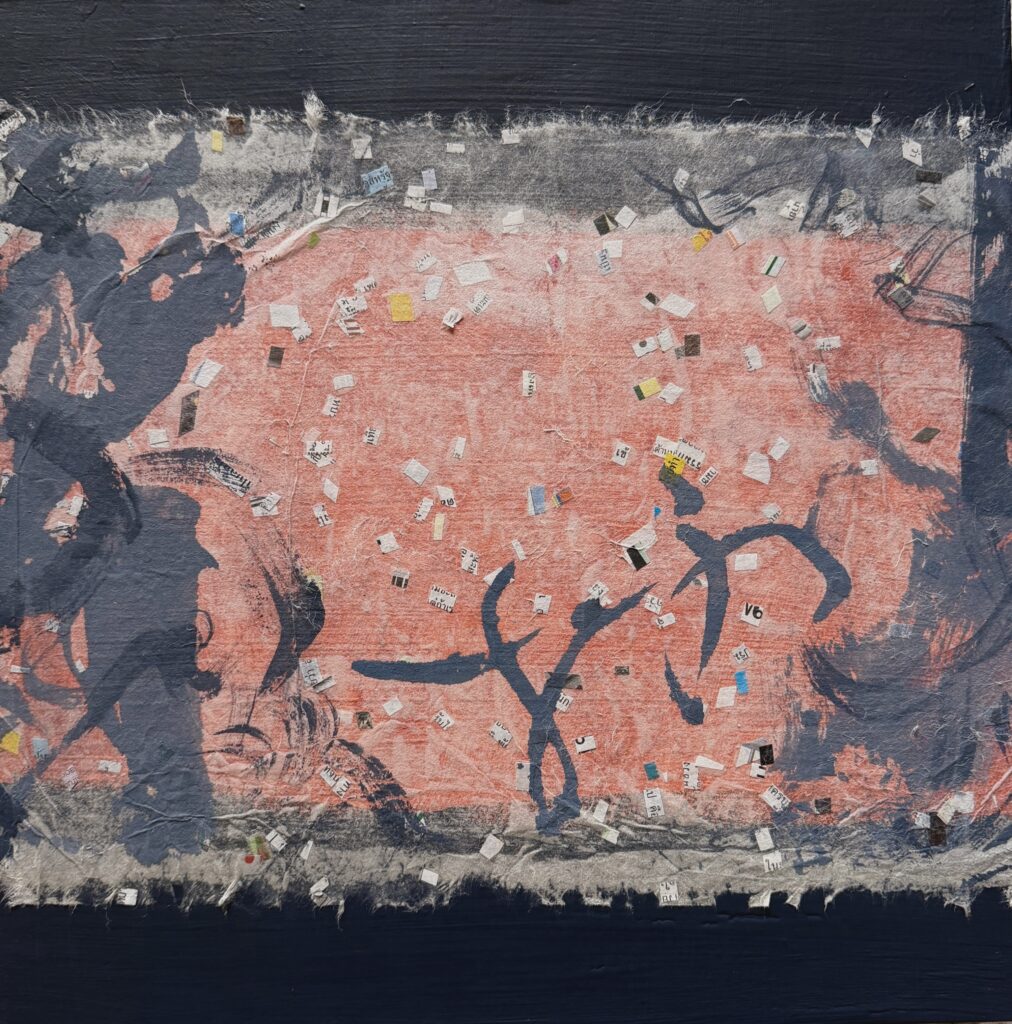
Abstraction can communicate experiences that language cannot. Through gestural line and shape, visual rhythm, color contrast, asymmetry, and texture, my work speaks to emotion and perception. Language tends to describe an experience after the fact. Abstraction allows us to experience something as it unfolds.
Music doesn’t explain itself, yet it moves us profoundly. Music rarely tells us exactly what to feel, yet it can move us to tears or fill us with joy. Abstraction has that same capacity. It invites an emotional and physical response before our minds begin searching for words.
I want my work to create an experience. Abstraction gives viewers room to bring their own memories, emotions, and perceptions. That openness is one of its greatest strengths.
Abstraction reaches places language can’t.
You’ve worked at a wide range of scales, from intimate works on paper to immersive installations. How does scale change the way you approach a new piece?
The first thing I ask myself is, “What does this idea require?” My approach doesn’t begin with deciding how large or small a piece will be. It begins with understanding the idea. From there, I begin researching, sketching, and asking more questions. Where will the piece live? Who will experience it? What materials best serve the idea? Does it ask for intimacy, or does it need the physical presence of a larger scale?
The scale grows naturally from the needs of the idea.
Music unfolds over time, while a painting is experienced all at once. How do you translate something temporal into a visual form?
I paint what I see. Minute by minute, music and emotion continue to unfold. I experience layers of color, shape, movement, atmosphere, and texture. Those visual experiences move across my eyes, and I build them into the surface of the painting, one layer at a time.
The finished work doesn’t represent a single moment. It holds the accumulation of time. Like memory, every layer remains present, shaping the meaning of everything that follows. Every time we return to a painting, we bring a new experience and a different perspective. The relationship between the viewer and the painting continues to evolve.
Looking at your recent work, what questions are you most interested in exploring now that you weren’t asking ten or twenty years ago?
Twenty years ago, I created a figurative painting inspired by Thich Nhat Hanh’s belief in nonviolence. It jarred me into reconsidering my work. Until then, I had been painting landscapes, animals, abstraction, and commissions. I enjoyed those subjects and could paint what people wanted. That painting marked the moment when I changed my approach to making art. My experiences, stories, and understanding of what it means to be creative and human have become the foundation of my work.
I explore new materials, processes, ideas, and curiosity found in play. I engage the creative process to understand everything more deeply. That investigation leads me into painting, photography, installation, movement, writing, and collaboration. Different questions ask for different forms of expression.
The inquiries that interest me now are about authenticity, relationship, memory, perception, and what it means to be authentically human. Curiosity leads me, and that’s one of the things I love most about being an artist.
All images and introductory text/bio courtesy of the artist.


Be the first to comment