
Co-presented by IndieCollect and IFC Center, “Declaration of Independents!” is a 9-day salute to indie filmmakers who asserted their creative freedom during a formative era of American independent cinema. Showcasing 20 films (four in new restorations from IndieCollect) spanning the years 1979-89, from daring narratives to boundary-pushing documentaries, the series spotlights artists who re-shaped cinema, revealing America through an independent lens.
This retrospective, curated by IndieCollect and IFC Center, invites audiences and up-and-coming filmmakers to see some of the best and most enduring movies to emerge during a key decade of the American independent cinema movement — films that remain startling, entrancing, prescient, and great fun to discover/rediscover today.
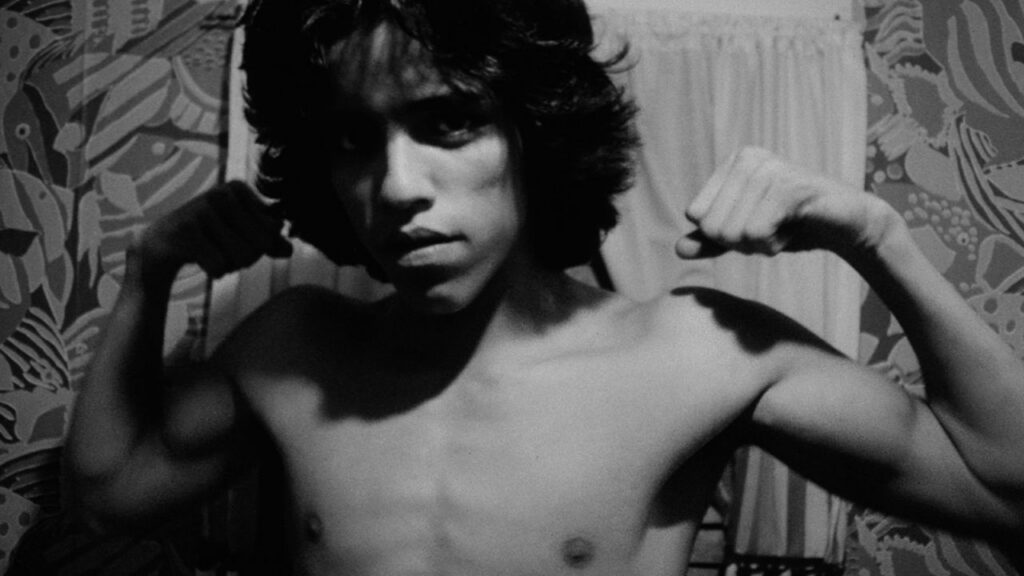
In this interview, Gus Van Sant talks about his debut feature, MALA NOCHE. Heralded as an idiosyncratic, provocative new voice in American independent cinema, the film is the quintessential signpost to the New Queer Cinema of the 1990s, opening the road, showing the way. Set in Van Sant’s hometown of Portland, Oregon, the film evokes a world of transient workers, dead-end day-shifters, seedy bars and apartments, all bathed in a profound sense of night, but the “narrative’s driving force,” as described by film critic and curator Dennis Lim, “is blind, unembarrassed homosexual lust.” MALA NOCHE deserves its iconic status not only as an openly gay movie, but also as an auspicious prelude to Gus Van Sant’s extraordinary body of work.
Watch the trailer for the series.
MALA NOCHE screens on 35mm at IFC Center on July 5 at 7:35 pm and July 7 at 9:35 pm.
Mala Noche is based on Walt Curtis’ semi-autobiographical novel. When did you first read it, and what were some elements of it that particularly captivated you and inspired you to adapt it into a film?
Gus Van Sant: Gay story lines were not a large part of American filmmaking at the time —John Waters’ Pink Flamingos was one which was a definite inspiration…I read Walt’s story while working as a sound man on a small film in Portland, Oregon, called Property. Walt was a character in Property, and I got to know him and his work. Mala Noche was his most celebrated piece…and was also inspirational.
You had originally planned on having Walt Curtis play himself in the film, but instead you cast Tim Streeter, who has a very particular presence. I feel like I’ve met guys just like him – earnest and outgoing, aware of their flaws but not maybe caring enough about them to change, aware of their privilege and how it gives them a power imbalance with certain people in certain situations, but also still willing to use that imbalance to their advantage, all while being a bit self-pitying (this is all how I saw him, anyway). Did you ever get a sense of what Curtis felt about this representation?
I think having Tim Streeter play Walt made the character different – in the book and in life, Walt wasn’t earnest in the same way and would not have been someone to care about his flaws. He respected the integrity of the Mexicans and their relationship to family, and sex, working in the fields and sending money back to family in the mail, not caring if men slept with men, compared to his own backwoods morals.
Walt was interested in the whole idea of the film getting made…and he helped a lot on it. He would probably agree that Tim was a very different person. Walt was a very funny, opinionated, and loud poet who would get kicked out of bars a lot. Tim playing him made Walt less of these things, but still opinionated, if somewhat quieter.
The black-and-white visual style of the film is clearly noirish (and what better location for moody rainy streets than Portland), and the shots are very visually concentrated, with heavy use of key lighting, along with a staccato editing style that creates a disjointed sense of time and narrative. It was shot by John J. Campbell, and the film has a verité feel, but I understand you also worked off very detailed storyboards. Did the distinct visual and editing style of the film emerge in post-production, or had you always thought of it as having this kind of look and rhythm?
I made the film from storyboards I drew over a two-year period, so every shot had been pre-imagined, and there were a lot of them. Our crew was: – myself lighting the scene, John Campbell on camera, and Pat Baum who did sound. We could move very fast over a 20-day period.
The look was in the storyboards, and the lighting was influenced by a lot of black-and-white films like Eraserhead, The Third Man, and Psycho. I rented a couple of spotlights that I used a lot. I edited the film myself on rewinds and a Moviscop, a simple film viewer…the distinct editing is partly from the way the storyboards were created, like a Hitchcock film.
Creighton Lindsay scored the film. What kind of music and auditory tone were you looking for with this project, and how did you work with Lindsay to achieve it?
I wanted to emulate the sound of Ry Cooder’s guitar on Paris, Texas – which Creighton was great at doing, although I think he did have something more intense in mind.
The film handles the lives of immigrants in ways that feel honest but also don’t seem intended to make a statement, but watching this for the first time in 2026, the perilous and marginalized lives of Johnny and Pepper emerged to me as one of the most relevant aspects of the work today.
I’ve read that there was initially some criticism of Pepper’s murder, in the sense that it was included to add unneeded drama, but looking back on this 40 years later, do you feel you were prescient in the way you depicted these casual cruelties and how easily immigrants are disposed of in this country?
It was a change to the story to have Pepper shot by the police…it was a different atmosphere back in 1975 – in the book, Pepper was just missing, maybe something bad happened, but then he turned up. But yes, today would be even more likely to have something as dark as a shooting.
Photos and intro copy courtesy of IndieCollect and IFC Center.



Be the first to comment