

Co-presented by IndieCollect and IFC Center, “Declaration of Independents!” is a 9-day salute to indie filmmakers who asserted their creative freedom during a formative era of American independent cinema. Showcasing 20 films (four in new restorations from IndieCollect) spanning the years 1979-89, from daring narratives to boundary-pushing documentaries, the series spotlights artists who re-shaped cinema, revealing America through an independent lens.
This retrospective, curated by IndieCollect and IFC Center, invites audiences and up-and-coming filmmakers to see some of the best and most enduring movies to emerge during a key decade of the American independent cinema movement — films that remain startling, entrancing, prescient, and great fun to discover/rediscover today.
In this interview, director Fran Kuzui discusses her film TOKYO POP, a charming and observant valentine to Japan’s vibrant pop culture. After getting a friend’s postcard of Mt. Fuji saying, “Wish you were here,” bleached-blonde rocker Wendy (Carrie Hamilton) hops a plane to Tokyo. Broke, she takes work at a karaoke bar. Just when she’s at her breaking point, she meets Hiro (Diamond Yukai), a rock ‘n’ roller whose band is flailing. Hiro convinces Wendy to become their lead singer. Through a combination of hustle and luck, they stumble into fame. But Wendy realizes that being a pop star “gaijin” (foreigner) is no substitute for success at home.
Kuzui’s next movie, Buffy the Vampire Slayer, was turned into a hit TV series. But America’s entertainment industry never offered her another chance to direct — a fate suffered by many talented women auteurs. IndieCollect’s 4K restoration, created with gifts from Dolly Parton & Carol Burnett and support of the Golden Globe Foundation, helped revive the movie and secure a release by Kino Lorber.
Watch the trailer for the series.
Friday, July 3 at 7:20 at IFC Center: Q&A with director Fran Rubel Kuzui
This interview has been edited for length and clarity.
What gave you the initial idea or inspiration for this story? Were there some other films or media that you looked towards when you began working on this?
Fran Kuzui: Quite a few of the films in this series were my inspiration for making Tokyo Pop. And that’s one of the reasons this is very exciting for me. I went with my husband, Kaz, to the very first screening in the United States of Wild Style at the New Directors/New Films at MoMA. When the film was over, my husband turned to me, and he said, “I need to show this film in Japan.” But we weren’t film distributors at the time. Charlie Ahearn was there, and Kaz went up to Charlie and told him he needed to show the film in Japan. And Charlie said, cool. And we wound up bringing Wild Style to Japan, along with, I think, 32 of the people from the movie.
It was the beginning of hip-hop culture in Japan. No one had ever seen any of this. No one had ever seen breakdancing. No one had ever heard any of the music. There was no graffiti art ever shown in Japan or up on the walls. I would say for almost all of them – except for Fab 5 Freddy – this was their first experience leaving the United States. And I was very struck by watching their experience of being in Japan.
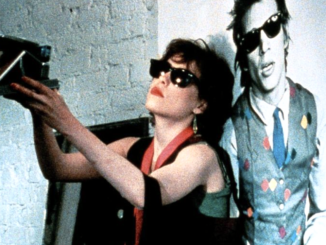
Around the same time, I had seen Smithereens and thought, wow, I could make a movie sort of in that spirit. It’s directed by a woman. And Bette Gordon had made her films, and I thought I could do that. And we had a distribution business at that point, when I started to make Tokyo Pop, and we had She’s Gotta Have It, because Spike [Lee] wanted us to do it. We had met him during the preparations for Wild Style because he worked for First Run Features. And he used to come to our house, and I asked him about it, and he said, go for it, Fran. And I knew Jim [Jarmusch] because we had met him right after his first film, Stranger Than Paradise. And I asked him, and he said, yeah, Fran, you can do it. And we were hanging out at Ben Barenholtz’s house and knew the Coen brothers, and they were very encouraging. And as we got the film together, I called Jarmusch, and I said, I need a cameraman. I don’t know a cameraman. And he said, oh, yeah, I’ll set you up. And that’s how I met Jim Hayman.
And it was really this whole group who influenced me and encouraged me to make Tokyo Pop. And that’s why, for me, this is like coming home. And it is possibly the greatest honor this film has been given to be in this group with these people.
So, to you, what is the core of this story? Is it two people kind of missing each other on a deeper level? Because they’re only really seeing the surface levels of their very different cultures. For example, Wendy asks Hiro why he never talks about himself. And he tells her Japanese people generally just don’t talk about themselves. And then he also doesn’t seem to really try to get to know her initially, kind of beyond her novelty as a blonde gaijin. What do you think ultimately brings them together and bonds them in the story?
Music. You know what? I had never been asked that question. I’d never thought about that. And so, when you asked me that question, I just sort of went blank. And the first thing that came into my mind was music. Definitely.
I went to NYU and studied film. And the first thing they ever taught you in film school, at least when I went there, is you should always make your first film about yourself. And so, Tokyo Pop was really about myself. Now the interesting thing was, I thought that Hiro was me and Wendy was my partner and husband. I hadn’t seen the film for maybe 25 years, and they had a screening at Japan Society in 2019. I sat through the film, and there was a Q&A afterward. And the first thing I said was, oh my goodness. I always thought I was the male character in this film. And 25 years later, I realized that I’m the female character in this film. And in the 80s, when I wrote the film, women were not really encouraged to be who they were. And you would never think that a Japanese guy would encourage me. But that’s what [Kaz] did.
I started talking about how I wanted to make a film. And one day he said to me, pack a suitcase. And I said, for what? He said, you’re going somewhere. And I said, oh goody, a vacation. How wonderful. He said, well, not exactly like that. I packed some clothes, and we got in a taxi, and we went to a hotel. And I was getting really happy about that. And we got to the room, and it was a very small, single room, and there was a table with a typewriter on it. There were no computers at that point. And he said, I need you to stay in this room until you finish a script. I know you have a script that you. The room’s been paid for. Don’t call me. Don’t come home. And I, being the Jewish princess, loved the room service. And it was fine for me. And I think I stayed there about five or six days and had a rough outline of the script. But what was most interesting to me about the story is Hiro’s empowering her to be herself. At that point, I wouldn’t have been able to describe the characters more deeply than that.
And Wendy is also trying to empower him because he and his band are only doing covers of classic American songs. But then also, she’s really fixated on kind of being punk…original…a key line from her, where the title comes from, is, “You know, this isn’t rock and roll. This is Tokyo pop.” And to me, this is a very pop movie in its sensibility. It’s light. It’s a comedy.
Well, it is a pop film, and when I’m thinking of a pop film, you don’t go too deeply. And at the time that I made it, I don’t think a foreign woman had ever made a film in Japan. And for me to go more deeply into either of the characters would have been a little more than people were ready to see. I mean, people weren’t ready to see Tokyo Pop. It was interesting. When it first came out, the reaction was very different from what it is now.
How so?
The distributor asked me to take all the Japanese names off the opening credits because they didn’t want to think it was anyone to think it was a Japanese film. And they complained that there were 11 minutes of Japanese language in the film, and they were going to have to put subtitles on for that.
And look at where we are now. So, I don’t think I’m being defensive, but I don’t think I could have made a film that went any deeper than that.
It was originally funded by Spectrafilm, which was a Canadian company, and a Japanese porn company. And I haven’t really ever discussed this before, but I was trying to get the movie made. And we knew this guy who had a soft-core “romance pornography” company. And he said, look, I can give the money to the Japanese government, or I could just invest it in your film. Which would you like? And I went, I’ll take the money. That’s what independent film was at that point. Somebody once said to me, oh, you took porno money to make a movie? I said, is it any different from studio money?
IndieCollect restored the film. How involved in that process were you, in the sense of consulting with them, working with them? How did that play out?
That’s the amazing thing about IndieCollect and Sandra [Schulberg] in particular. They wouldn’t do anything without me. They involved me in every aspect of the restoration. It was like remaking the film for me. And I feel they helped me to make the film available again because it was totally lost. We hadn’t found the internegative, and somebody at Japan Society found that and had this original screening to which Sandra came, and when the screening was over, she stood up in the back of the audience and said, Fran, we’re going to restore your film!
And from that day, she was the most amazing supporter. And I must say that it looks better than it did originally on film. And we couldn’t find the sound…it was lost. It was not in the laboratory with the negative. And they helped enormously on a worldwide hunt for the sound negatives. And without them, I never would have found it. And it turned out to be in an MGM archive in Chicago. Don’t ask me how it got there. Nobody knows, not even MGM.
I want to ask about the guy who played Hiro, Japanese rock singer Diamond Yukai, vocalist for the Japanese rock band Red Warriors. How did he get involved, and what did he bring from his own real-life experiences into his character in the film?
I was watching music videos at that time, looking for somebody who might be right for the part. And I’d found somebody. Kaz and I contacted his manager, and we met with the manager, and I started hanging out with this singer whose name was Yutaka Ozaki, and he very tragically died of a drug overdose. And we met with the manager again, and he said, well, I have another Yutaka for you.
And so, he arranged for me to go and meet Yutaka Tadokoro Diamond Yukai, who was in rehearsal with his band. And I came in, and I introduced myself. And he went, my manager sucks. And I knew he was exactly the right guy for the film. He had all this rock and roll swagger of a 20-year-old, and I loved it. And he didn’t speak English, and I said, well, you’re gonna have to learn English. How about if you come to New York with me and you spend a couple of weeks in New York just absorbing New York and learning how to speak English? And he said, okay, I’ll do that. And there was no room in my apartment. We had a small apartment. And I said to Charlie Ahearn and his wife, Jane Dickson, do you mind if you guys sleeps on your sofa? And they went, no, the more the merrier! So, he came to New York and stayed with Charlie for two or three weeks to learn English, and Charlie just immersed him in New York. They were living on 43rd Street or 44th Street at that point. He got a very big dose of New York.
Interestingly, [Yukai] said to me, well, now that I’ve learned English, there are so many things I want to say, but I can’t say them in Japanese. They’re too emotionally complex for me and painful. But English is another language, and I can really be free in English, which really influenced the film.
How did you come to work with Carrie Hamilton? I didn’t know anything about her until this film, and then I read that she was Carol Burnett’s daughter.
When I was a child, my idol was Carol Burnett. I loved Carol Burnett. And there was a picture of her. And there was a picture in People magazine one day of Carol and Carrie. And I cut it out like teenagers do and put it on my wallet and carried it around for years and years. And when we were testing Tokyo Pop, they said that in order for them to market it, I should find somebody who had a famous relative, so they started bringing me pictures of headshots of people who had famous relatives. And we couldn’t find anybody.
One day, they asked me what my image of Wendy was. And I brought in the picture of Carol Burnett and Carrie. And I said, for me, she looks exactly like Carol Burnett’s daughter. And they went, oh, she’s an actress. I went, really? I didn’t know she was in the TV show Fame. And a couple of days later, I flew out to LA. I walked into the room, and Carrie looked at me, and I looked at Carrie, and I said, you want to be in my movie? And she said, yeah, let’s go eat.
So, we went out, and that’s exactly how I cast her. I just knew she was exactly who I was looking for the minute I laid eyes on her. The universe had arranged it, and I knew it. And I don’t think I could have made this movie without her, honestly.
How did you wind up co-writing the script with Lynn Grossman?
I wrote the screenplay myself, but I didn’t really know how to write a script. Lynn Grossman and I were very close friends in film school, and we hung out a lot. We were in the same class, and she was studying film as well. There were four women in our entire class when we were there. And I ran into her in a Japanese restaurant in the West Village, and we reconnected and started spending time together. And so, when I wrote the script, I wondered if Lynn would help spruce it up. She was a script doctor at the time. So, I sent her the script, and the next day she called me and said, I’m in. When do we start? And she’d never been to Japan before, which was interesting to me, but she did her magic on it.
And when I showed her the film, I said, what did you think? She said, I rewrote your script, but you made it back into your film. Which was the nicest compliment she could have given me.
I have a favorite line in the film, which Lynn wrote, and that is when Wendy and Hiro are arguing over being the opening act for the pro wrestlers. She looks at him and says, why do you have to be so Japanese about everything? It’s my favorite line because it really distills exactly how I very often feel in Japan. And it’s so funny. And I laugh at myself every time I feel that way.
And I will say there is one image in the film that everybody comments on. Jim Heyman came up with it. It’s when Wendy’s in the train station and everybody’s walking towards the train and she’s walking the other way.
That shot jumped right out to me when I saw it.
And I would say those two examples are how much they supported me and helped me with the film.
What’s your favorite personal memory of making this film, like a funny incident, moment, an outtake, something that a lot of people wouldn’t know about?
We were shooting on location one day, in Yokohama, which is about an hour by train from Tokyo.
We were shooting in a recording studio. It was lunchtime, and Carrie and I decided to take a walk and get some fresh air because the recording studio was in a basement. So, we set out, and after about half an hour, Carrie said that it was probably a good idea to head back. But we realized that we were lost. And there were no cell phones at that point. I couldn’t remember the name of the place where we were shooting.
So, Carrie said, well, what do we do? I said, well, we’ll just walk around and look for some film trucks. So, we walked around for about 10 minutes. I don’t speak much Japanese, but I kept asking “music studio, where?” In Japanese, I could say that. We went to the Yokohama train station [and found] a tourist information group. They spoke English. I said I’ve got a problem. I’ve been looking for my movie crew. They didn’t know what that was. And they asked if I would like to talk to the army base. And I went, no, no, I don’t think they’re going to know where my movie crew is. And they went, well, usually people like you have strange requests. We send them to the army base because they’ve usually come from the army base, because this was the 80s…
And Carrie said, I have a great idea. Maybe they’ll let us call the production office. I have the call sheet, and the phone number for the production office is on the call sheet. So, they called the production office, and we said that we were lost and at the train station, could someone pick us up? The first AD arrived, and he went, you are in real trouble. I said, yes, I know. I hang my head.
But that’s how primitive things were when we were shooting then. And, you know, all of Tokyo Pop and all these films [in this series] are a real time capsule of the 80s.
When you could get totally lost like that. And it mirrors that scene with Wendy in the film, when she can’t find where she’s staying, and she’s trying to get a bunch of taxis…
Oh yes, it’s life imitating art.
Photos and intro copy courtesy of IndieCollect and IFC Center.

Be the first to comment