
Co-presented by IndieCollect and IFC Center, “Declaration of Independents!” is a 9-day salute to indie filmmakers who asserted their creative freedom during a formative era of American independent cinema. Showcasing 20 films (four in new restorations from IndieCollect) spanning the years 1979-89, from daring narratives to boundary-pushing documentaries, the series spotlights artists who re-shaped cinema, revealing America through an independent lens.
This retrospective, curated by IndieCollect and IFC Center, invites audiences and up-and-coming filmmakers to see some of the best and most enduring movies to emerge during a key decade of the American independent cinema movement — films that remain startling, entrancing, prescient, and great fun to discover/rediscover today.
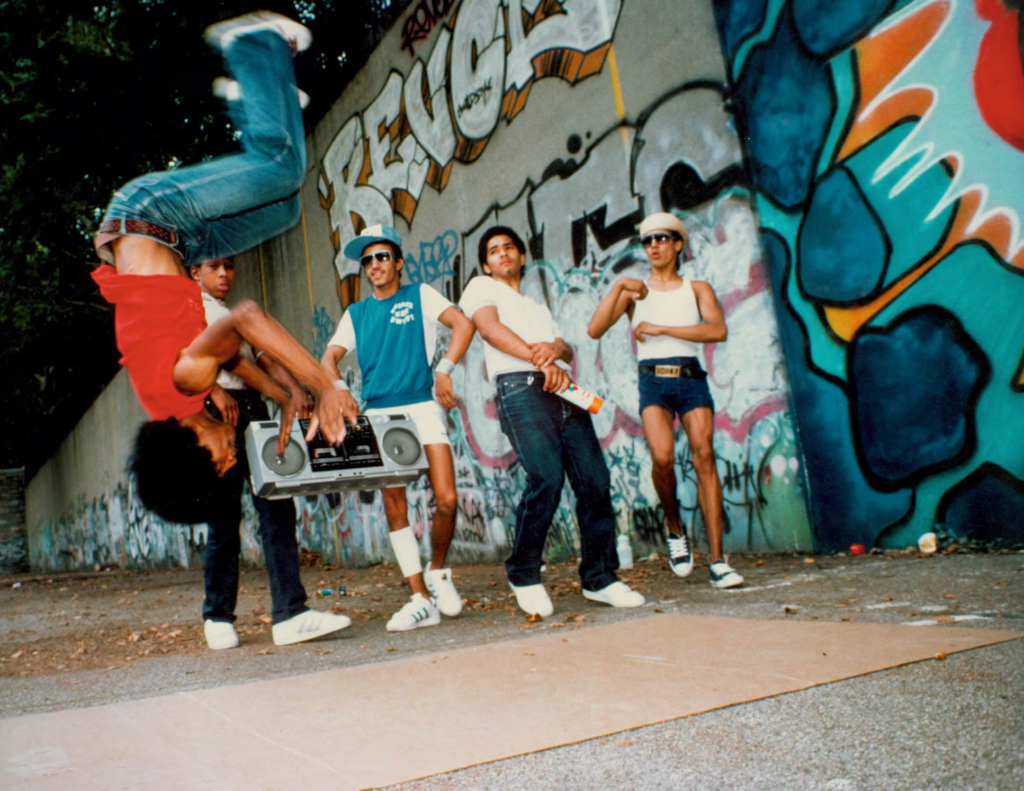
In this interview, director Charlie Ahearn talks about his groundbreaking film WILD STYLE. “Indisputably the most important hip hop movie ever” per the BBC, the Rock and Roll Hall of Fame cites it among its top ten films of all time. In his groundbreaking hybrid of fiction and documentary, Ahearn follows graffiti artist Lee (‘Zoro’) Quiñones as he struggles to get his art taken seriously.
The movie features electrifying performances by Grandmaster Flash, Busy Bee, Fab Five Freddy, Lady Pink, Cold Crush Brothers, and Rock Steady Crew. WILD STYLE’S historic influence and soul-affirming power cannot be understated. This is cinema by the people, for the people.
Watch the trailer for the series.
Thursday, July 2 at 7:00 at IFC Center: Q&A with director Charlie Ahearn after the screening
This interview has been edited for length and clarity.
With Wild Style, was the plan always to have it be kind of a hybrid of scripted narrative and documentary?
Charlie Ahearn: I just made films that way. I wasn’t a documentary filmmaker. I always thought of my films as a kind of narrative art filmmaking, so [with Wild Style] I thought of myself as making kind of an art movie for teenagers. And the idea was not to make a documentary. I never interviewed people. I didn’t approach it from that viewpoint. I approached it from the viewpoint of: can I make an impactful little story out of it?
Did you also feel like it would have helped in terms of marketing the film and getting interest in it if there was a narrative story instead of it being a straight documentary?
It wasn’t like, “Oh, I would have made a documentary, but I thought it could get more [money] with a [scripted narrative].” I made a film two years before Wild Style, which is a kung fu movie that I made in Super 8 [The Deadly Art of Survival], in the same housing project that Lee Quiñones was from.
There was a release of Super 8 film with sound strips on it. We’re talking late ‘70s. And I happen to know at least six other filmmakers that started making narrative feature films on Super 8 all at the same time. And the idea wasn’t that you thought you could get a bigger distribution. There was no distribution. You just thought it was more fun.
And these films all tended to have music-related things in them. They would combine people that were involved in the music scene or in the art scene as actors. So, it was kind of a way to include all this together. And to me, I felt like the thing was to make genre movies. In other words, I was making a kung fu movie. It had a story to it. It was not a documentary.
I showed it in housing projects, and this was in 1978 and ’79. And I brought it to Europe, and I showed it all over. And people sort of got it. Even though the idea was not prevalent. I mean in the outside world people weren’t asking: “Is this a documentary? Is this a narrative movie?” And my feeling is why ask that question? Why not have something that combines the two? Because I liked both aspects. Which to me is closer to real life than a documentary. I’m not saying it has more facts in it, but it is closer to real life. That’s what I was trying to do.
When I made Wild Style, I didn’t make a script and hand a script around and talk to people about being in my movie like as if I’m casting them. That wasn’t the way I approached it, and it wasn’t the way I approached my previous movie. It was more like, “I’m making a movie and I want you to be in it because you have a lot of talent and I like you.”
So, in terms of any writing, was it kind of on the fly day-by-day? How much was improvised?
I would say Wild Style had a rough story. I shot a whole [version] of Wild Style in the fall of ’81, when I started shooting the film in earnest. And in the winter of ‘81, I decided that the whole thing was trash. It was a long movie, several hours long, but it wasn’t a movie. So, I decided to rewrite it, closer to what I thought would make a great movie, and because I was getting Lee Quiñones involved, I felt that the core of the movie would be a love story between Quiñones and Lady Pink, which it is the core of the movie, the story that holds the whole film together narratively and emotionally. And I wrote – I won’t call it a script, but I wrote key scenes.
I read that Lee was initially hesitant about being the lead in the film.
Lee was always going to be the lead in my movie. I knew that he was going to do it. Of course, because of who he is, he had spent so much time not getting caught by the police, not telling people who he was, and basically trying to live a life which is like the one he has in the movie.
Fred [Brathwaite, a.k.a. Fab 5 Freddy] and I talked at the Times Square Show, which was in June of 1980. And I was always thinking of making this movie with Lee. And then Fred approached, saying, “Wouldn’t it be cool to make a movie that combined the subway car [graffiti art] with hip hop?”
And of course, I thought it was a perfect idea, and I said, “Well, it all hinges on you bringing Lee Quiñones here tomorrow morning at 11:00.” Which he did. And the fact that Lee showed up, I said, “Here’s some bank.” In other words, I gave him 50 bucks, [and said], “Get some spray paint and do a piece on the outside of this wall.” It wasn’t my wall. I didn’t have permission to do this. But this is the way everything in the movie happened –spontaneously. And I knew because Lee was there with Fred and painting this work, that I had him, that he was in it, he was going to do it. He just didn’t want to seem like he was doing it.
I thought Fred was the key. He was so important to the movie because of his presence as an actor. Fred always thought he was going to be one of the so-called filmmakers. And the truth is, he didn’t have time for that. He was doing so many other things. And when we got down to making the movie, I looked at Fred and I said, “You’re going to play this role of the character that’s between the subway graffiti writers and the music people.” And it wasn’t really a role that he was playing in real life, but it was the way that I saw him in the movie, and he was brilliant in it.
Yeah, he’s so charismatic. He brought a lot to the role.
He had never acted in a movie before. But first of all, he’s really intelligent, he’s really funny. I love Fred. So we got along really well. And it wasn’t like we were writing the script together or something like that. It was more like we were making the film together. That’s how I thought of it.
A central conflict in the film is Zoro’s [Lee Quiñones’s character] unwillingness to join the Union Crew, which Lady Pink is a part of. They’re doing commissioned murals. Was that actually happening in real life?
All those people that were in the Union Crew, like Crash and Daze, were real. They were subway writers who were trying to get money by doing walls for people.
But from Zoro’s point of view, it seems like he thinks it’s kind of selling out or something.
He’s not a part of them is the important thing.
But what’s his resistance to it?
He was super private in real life and in the movie. And he didn’t hang out with people. He did the part in the movie. But the truth is that he was not dependable, ever. When we shot the big [subway yard] scene in the movie, he punked out.
And I had DONDI with me all the time. And you have to understand that DONDI was as big a subway writer as Lee was. He was very important to the subway movement at that time. DONDI was always there at the office, around us, working on the movie. I think he was hoping that Lee was going to drop out and he would just be the star of the movie. So, it’s really DONDI that you see in the subway yard. Because Lee didn’t show up. And what would I have had with a movie if I didn’t have [that scene]? You know, a lot of money was rolling on this. So, in a way, I really wanted Lee in the movie, but he was also kind of a pain to work with.
I’m curious about the film’s animated title sequence. The animator was Joey Ahlbum. How did you come to work with him?
My wife, Jane Dickson, was also an animator, and she had some of the original ideas for doing animation for the movie. And then we had Zephyr and Revolt were in my office for a month. I had people coming in and helping, doing inbetweens [intermediate frames], and it was arduous paper animation, for real.
I thought that was really cool because we the animation is just like what [graffiti] piecebooks are. It’s done with markers. And I needed someone to help do the animation and a friend of mine said, “Why don’t you call Joey? He’s good with paper animation.” And he was perfect. He was great. He was there. He really helped figure it out.
How did Chris Stein [of Blondie] get involved with working on the soundtrack?
Fred, Debbie [Harry], and Chris were incredibly supportive of us making this movie. They were good friends with Fred, and I became good friends with Chris. And he was so supportive. He let us use his studio where he recorded music. He did a lot of the instrumental music for opening of the movie. And we made a record. Because I realized if the DJs in the movie could actually be DJs the way they want to be, which is play all the hot tracks and show off to people how much they know, then I’d be saddled with a movie I couldn’t release. So, I came up with the idea of having Fred help out [and] produce twelve different tracks of music. And actually, they only used one track, which was called “Down by Law,” and that’s the music all the way through the movie that all the DJs use. I didn’t want DJs to be able to use their own music because then I’d have to clear all that music to show the movie. It would have been cool if I’d had a big budget.
But overall, it’s got its own particular flavor because of its low budget and how you were working on the fly…
There was a real closeness to it all. Everybody in the Bronx was very excited about being in the movie.
What’s any particularly funny moment in the film that’s a special memory for you or something that was just sort of a surprise? I did read about the stick up scene, with the shotgun, and how those guys were the real thing.
Those guys, I didn’t know who they were, but I was there at the Dixie, right? [The Dixie Club, a legendary South Bronx hip-hop venue]. We’re there for real at the Dixie and I’m thinking to myself, I got to do this stick up scene like in about three hours. And I’m literally looking around and I go, what about those three guys over there? They look really mean, they look really tough. I should go over and talk to them.
So I went over when there was a break in the music, and I said, “Hey, would you guys like to do a stick up scene?” And they were like, yeah, sure. We’re on. And it’s like 12:00 at night in the Bronx. I don’t know who these guys are. We have $60,000 worth of film equipment on us…
When I talk to them about shooting the scene, I was really proud because I had this starter pistol that had a lot of weight to it, but it couldn’t shoot a bullet. But I thought, this is going to be great. This is going to really look like a real gun. And I brought it out and I showed it to [one of them] and he goes, “I ain’t using that thing. That’s a pussy gun.” And I go, well, that’s all I’ve got. And then he reaches under the front seat of his car and pulls out this raggedy old shotgun. It’s a sawed-off shotgun. There’s only one reason why people have sawed-off shotguns and that’s because they’re going to use them. I mean, it’s for real. And you know, I’m about to shoot the scene. I’m not going to say, “Can you open the chamber so I can see whether you have anything in it?” I didn’t ask him anything.
I’m proud of that because these aren’t actors trying to act like something. We’re not making a documentary. We are way beyond that notion of filmmaking. We’re making a movie, and it’s going to be done with the people who are in it. In other words, the people that are here are the actual people. You can’t get closer than that.
Photos and intro copy courtesy of IndieCollect and IFC Center.

Be the first to comment